Tag: culture
Beyond Words: Take 4 – A Personality Specific Faith
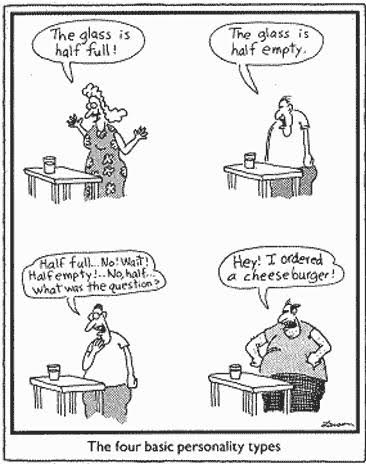
In this edition of Beyond Words let’s look at how your personality filters your faith.
My wife is sitting across from me just opening a medium-size bag of M&Ms. Different colors on the outside and consistently the same within. Very much like our world’s Christ-followers. Sometimes, even with a few nuts thrown in for variety.
Not all Christians are alike. Not all expressions of our faith are alike. Not all people are alike. Kind of like stating the obvious, isn’t it.
Yet within the decreasing influence of Western Christendom we try to maintain a boring sameness in our faith as is impossible. The reality of divergent races, cultures, and personalities should be obvious. We are all not one. We are a complex multiplicity of beings with a common commitment to Jesus Christ.
Thankfully, we live in an era where some really smart people have done some deep research on the different kinds of people we are. Isabel Briggs Myers and Katherine Cook Myers began their research in 1917, which culminated in the Myers-Briggs (Personality) Type Indicator Test in 1956 (MBTI). You can take a simplified FREE version of the Test here—
https://www.16personalities.com/free-personality-test
The observable reality that we each have a distinct personality is a great gift from God. For Christians, it means that the gospel can take on different shapes and nuances across a broad spectrum of races, cultures, and divergent personalities. We don’t all have to be the same. Even better, none of you have to be likeme. [Phew!]
You see, when God created us He intentionally built into us divergent dispositions to reflect the majesty of His glory. Thus, we are NOT all the same; nor should we be. If we were, it would be an admission that people are unilaterally boring and that the Lord God Creator of the universe is, in fact, not all that creative.
The myriad of different cultures and human personality traits is proof of exactly the opposite. Therefore we should also expect a plethora of different kinds of Christians— quiet, contemplative, sensitive, exuberant, and nuts. This must be so because the majesty and diversity of the Trinity imprints upon us, not in a manner to rob us of who God has made us, but to empower us within our specific personality design. What a gift!
So, get used to being you, trying to offend as few as possible. You have been designed the way you are for a reason; find out what it is.
For what it’s worth,
Gary
Beyond Words-Take 2- Faith Factors
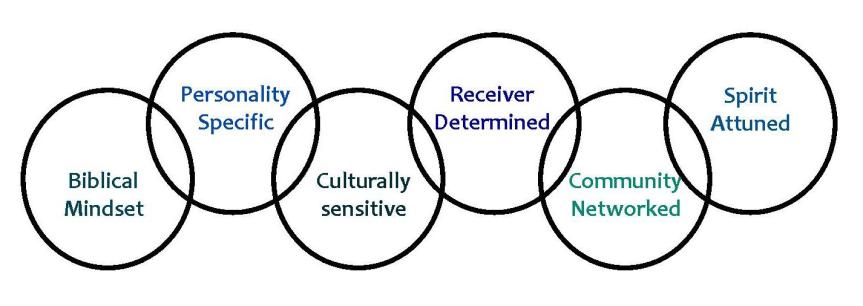
One critical question needs to be asked when desiring to connect the Christian Message with people living outside the confines of the Christian bubble. Namely— What are the key elements that determine the expression and communication of our faith in a postChristian society? As a reminder, we can no longer “just give them the gospel.”The gospel” simply has no cultural pinning in a world so long removed from its Christian roots. Maybe a picture is worth a thousand words—

In the next few EMPulses we will explore these 6 elements in more depth. For now, let us open a cursory unpacking of these ingredients.
First, to express and/or communicate our faith in this postChristian society we must establish a Biblical Mindset within our own practice of faith. Just going to church, saying the right words, and memorizing a few Bible verses conveys only s surface-faith to others.
Next, we need to understand that our faith is Personality Specific. Our personality filters our faith to fit who we are and who we must become. We must not squeeze ourselves into a faith-box. You cannot be like me or any other Christian. You must be you.
Thirdly, our Christian faith is Culturally Sensitive. We dare not continue to import a western faith into a postChristian Europe, emerging Africa, or a diverse Asia. One of the distinctives of our faith is that it fits into the heartbeats and lifestyles of the host-culture. Yet, in our Western, North American patchwork of cultural blends we must here, too, learn to be culturally sensitive.One size, or shape, does not fit all.
Fourth, as we offer people a relationship with Jesus Christ, we must remember that they must hear His offer of life in their context. “The Gospel” must be heard in their life context. Therefore, in many ways, the Gospel is Receiver Determined. How do they see the Christian faith? It is our task to express our faith in ways that they can respond to and receive Christ’s life into their own.
Fifth, the expression and communication of our Christian faith should be Community Networked. First, we should be networked within a healthy group of fellow believers who have a similar passion for the normal people around us. Second, our faith communication should be networked among those God has placed in our path. No need for commando raids or “debriefings” afterwards. We need to immerse ourselves into the lives of those around us who have no concept of the Christian message. [Warning: you may just come to love them.]
Finally, we, as genuine Christians, need to become more aware of the Holy Spirit of God within. We need to become Spirit Attuned. For we do not offer a person merely the Truths about Jesus, we are offering them Jesus Christ himself. We need to attune our spirits to be in line with God’s Spirit and also in tune with the lives of the people we have come to love. We cannot sense the work of Christ in the lives of others until we clean up our own inner-selves. No wonder God works in spite of us so much of the time.
For what it’s worth,
Gary
Beyond Words Reconsidered – Take 1
At the same time the BEYOND WORDS BOOKSHOP opened in Amherst, Massachusetts, I was developing a training course for Christians on the nature of the gospel, titled, coincidentally, BEYOND WORDS. Since they were about as humanistic as they come I took my course into them and asked if they would display my brochures. When they found out what it was about we all had a good laugh and the brochures were set up on the checkout counter by the register. Let’s just say that the first time we held the course it was, er, fascinating.
That was 25 years ago. Today the course has morphed into something far more expansive, fun, and exciting. But the thrust still concerns the nature and offering of our Christian message to the normal people of this culture. I use the phrase normal people because “Christian” no longer describes nor defines the majority of individuals in Western culture.
The next few installments of EMPulse will re-address our understanding, expression, and communication of the Christian message, the Gospel. This Take 1 concerns itself with the problems we face as our society loses its Christian memory and assumptions.
For the last ½ century we have boiled down “the gospel” to what we believe a person needs to know in order to become a Christian. Knowledge can no longer be the extent of our message to them. We are now engaged in a battle to verify what we say we believe through our involvement with peoples’ hurts, needs, and failures.
We dwell in a society that no longer holds to an agreed concept about the existence and nature of God, an understanding of a definition of sin (other thangetting caught), a knowledge of the life of Jesus Christ, and the ramifications of belief on/in Him. Nor do we dare assume they sense a need for any kind of God in their lives. The thought of needing an external reference point to guide their life-principles sounds weird to them. We need an expression of the gospel that goes beyond words, that challenges minds and touches hearts.
Asking people to “believe on Jesus and you will be saved” is loaded with so many subcultural assumptions that it has become a non-content phrase.
It’s time we reassessed the nature and content of the Christian message for this antiChristian world. To ignore the misgivings in our culture toward Christian cluelessness would be a grave disservice to our Lord Jesus.
For what it’s worth,
Gary
The (real)First Step
The first step in bringing people to faith in Christ is to get to know them. BUT before that, we need to understand how they see is. One of the ways I find out what people think about us it to ask them.
Here’s a video of just such conversations.
So when you leave your computer/phone, immerse yourself in the lives of your friends and workmates. Start by ASKING questions like:
1.What do you enjoy most about your life?
2. What is the most fun thing you’ve ever done?
3. What was it like growing up?
4. What has been your experience with Christianity, good and bad?
5. Describe your religious beliefs now. What does your spirituality offer you that Christianity does not?
6. To what extent do your beliefs influence your decisions and life motivations?
7.What problems do you have with the Church and/or Christianity?
8. How do you feel when a Christian tries to convert you?
9.How would you like Christians to treat you?
10. If you could change anything about the church, christians or Christianity what would you change?
11. How do you know that you are loved by someone?
Then after you have won the right to be heard, (maybe months or even years later) tell them about the God who created them, who loves them and who wants to give them everything He has to offer. Tell them about the God who offers his forgiveness to them for all the times they dishonored him. Tell them about the God who wants to make them WHOLE persons again.
Crippling Fear
How many of us live with a gnawing fear of failure? Some of us are claustrophobic (fear of small spaces); others have acrophobia (fear of heights). Then, of course, there’s always snakes, in-laws, falling, and computers. I coined a phobia once—Christophobia! Fear of Christians.
The list of Phobia’s goes on ad infinitum. Too many of us pile one fear upon another, compounding the depth and extent of a once simple fear, now, a muddled mess of fears.
As the horde of our fears combine, they produce in us a reaction— an invisible shield of protection. This is a wall we put up to guard against further “attacks,” whether real or imagined, from the world outside. Unfortunately, over time, our inner walls start to crumble, and we find ourselves less protected than we once supposed. This breakdown of our protective barriers can lead to further fear, a crippling fear.
It is no simple matter to deal with crippling fear, let alone to overcome it. If not addressed it can eventually overwhelm you and take your life. This is a serious, irrational illness.
It is said that perfect love casts out fear. [1 John 4:18] Short of God’s love for us I haven’t found much perfect love on this planet. Truthfully, sometimes even God’s love for us doesn’t drive out the fear that we grasp. But maybe that’s the problem—we really don’t want to let go of our fear. Somehow it has melded with the deepest part of our core and integrated into our identity. So now, it holds us.
Thus are we drawn into a war within ourselves; and it will not be an easy war to fight. Crippling fear knows just when and where to attack at every turn.
You will need help. Here are some simple tools I have used in my own fight with fear.
1. Anger. [Yelling at God.]
2. Prayer. [Listening to God.]
3. Music.
4. Scripture. Lots of it.
5. One incredible friend (ok…, more than one).
6. Counselors (again, more than one).
7. Medication.
8. Letting go of things I cannot change.
9. Listing my fears.
10. Single Malt Scotch (with that one good friend).
I don’t know if my list has been helpful: you may need to write your own. Whatever you do, DO NOT let this damn fear consume your life!
For what it’s worth,
Gary
Facebook Rant
Although this post from Trevin Wax is two years old it still deserves consideration, especially during this month of being thankful. Too many of us are full of rage and rant; some express it behind the wheel of a car, others, through their RANTs on FaceBook, instagram and twitter. When Christians RANT…, it goes to prove just how wide the division is between “us & them” really is.
When you look at your friends list, are you only seeing people who agree with you? People who will pat you on the back every time you say something? Maybe its time to think about the people who stopped being “friends” with you, or the people you have unfriended. Challenge yourself to be love-able to someone you don’t agree with today.
Unlike Jesus, we have lost the ability to walk among people who disagree with us and love them. Sad.
Gary
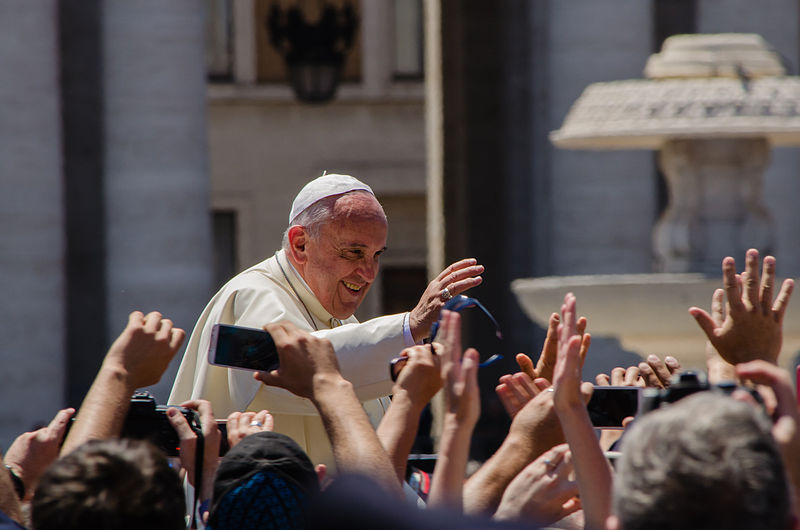
Pope Francis in America
Alfredo BorbaAs only the fourth Pope to set foot on American soil, Pope Francis has sparked an interest in not only the Christian faith, but in all religion across this land. Questions like, What do I believe? Do I really believe what I say I believe? What parts of those beliefs affect my life on a daily basis? And on a larger scale, What is our responsibility to the poor, the displaced, the strangers in our midst, and those of other faiths? Or, yet again, What is our responsibility to climate change? How can we handle the economic inequity across the globe?
On September 23rd, in his speech before a joint session of Congress (http://time.com/4048176/pope-francis-us-visit-congress-transcript/), Francis graciously summarized & tackled two major areas of concern we need to address— CULTURAL ENGAGEMENT and CULTURAL WASTE.
On the matter of Cultural Engagement, he encouraged all Christians, everyone in the United States, and everywhere, to solve the world crises in immigration, of refugees in the Middle East and Europe, to seek solutions to seemingly unending regional conflicts, and to learn that differing cultural perspectives can actually serve to improve the human race rather than to further divide it. We all must engage people who are different from us, for our own sake. Otherwise our differences will lead to misunderstanding and misunderstanding to mistreatment and war. We must end our isolationism.
On the matter of Cultural Waste, Pope Francis’ deep concern was not only what we all are doing to our environment through national industrial pollution and waste byproducts, his concern was primarily with our attitude toward the humanity of humans. He called for an end to treating illegal immigrants as numbers, and called for an attitude where they are simply people, seeking a better life. He called for governments worldwide to find a solution to the massive migration of people from the Middle East and Northern Africa fleeing for their lives and for safety to European and Western borders. We dare not turn our backs on them because of their massive considerable numbers; they are people.
His admonitions should move all of us to contact our Congressmen and Representatives to STOP ignoring these tragedies as if time will simply take care of them. It will not. WE must take care of them as if God is demanding that we do it. I couldn’t agree more.
What are you being called on to do to make a difference?
Finding the Entrance to Hell
Contrary to popular belief the entrance to hell is NOT Newark Airport; nor is it in a hidden parking lot at LAX; nor does the entrance to hell exit in Hinesville, GA Though these are all probable possibilities, their designations as such is not even close, even if closely feeling like it.
For a culture that increasingly does not believe in God or an afterlife there sure seems to be a lot of belief in angels and demons, and in a literal Devil. God was deleted from our interest list when He infringed on our personal preferences and pleasure. Bad God, bad God! That being said, it must be noted that Jesus is making a comeback in the movie industry. Good Jesus, good Jesus. At least someone is making money
We do not like to think about the possibility of hell existing as our soul’s final resting place. We are not even sure how to describe hell, if it actually exists. For help, I point you to Dante Alighieri’s (1265-1321) Divina Commedia, the medieval worldview’s allegory of the afterlife. (Read it in English.) Some of us are deeply concerned about not going there. WE construct rules and practices to obey so that we DO NOT go there: most of us merely toss the idea aside as antiquated imagination. Thus do we play with it in the media. Hummm.
However, allow me to suggest that, though few of us are actively looking for the entrance to hell, unless you are already at Newark Airport, we certainly try to live like hell. Don’t believe me? Here’s my list on whether or not you are seeking, or heading to, hell.
1. You put yourself and your interests first—all the time.
2. You ignore the advice and/or criticism of people who really know you.
3. You live by your own standards; circumstances, or the needs of others, be damned.
4. You don’t give a rip about our world’s poor or needy.
5. You don’t listen: your opinion or agenda are all that matter.
6. You are stingy, tight-fisted and penny-pinching.
7. You are kind to others only if there is something in it for you.
8. You talk a good game, but do little to back up your words with action (ATNA).
9. You never, never ever sacrifice.
10. You rarely feel anything. It’s safer that way.
If any of these descriptions define you, you are well on your way to finding the entrance to hell.
For what it’s worth,
Gary
Christians in North America
-
How should Christians view their fellow North Americans? Taking all this into consideration, how should Christians in North America look at their society? To start, we need to remember that a great deal of our world has changed. Christians are no longer the dominant influence forming either political platforms or societal mores, however much they would like to be. To live as if this is not so would be to deny a new reality that has overtaken the Western World. There is little understanding of genuine Christian faith. Once this hits home it must affect how we view our friends, neighbors, and work associates.
At the very least, to relate to them in any way at all, we need first to BE in their world. That may sound like stating the obvious; most of us work in the marketplaces of life 5-6 days a week. But do we work there as Christians? In general, we do not, except maybe privately, secretly hiding our faith (out of fear?) because we might not know the answers to some of their questions. If we were more transparent about our faith, I dare say Christian influence would jump exponentially. Instead, we’ve become closet Christians in the living rooms of the world. Many of us isolate ourselves within an evangelical or main line church world, venturing into “the world” as Christians, as infrequently as possible. We may work in this world, earn a living, raise our kids, shop for food and clothes, pump gas, go on vacations and vote for the candidate of our choice; we just don’t interface with the people we meet as transparent Christians—more as non-descript Christians, with little or no Christian definition or expression to our lives. This is not good. It is almost as if we are afraid of being identified as Christians; it is almost as if being “Christian” brands us with a kind of societal stigmata. And, to a great extent, given the revelations of recent “Christian” evangelists, preachers, and other leaders, there is some truth in this.
But what if we were REAL in our Christian faith; what if we talked casually about our faith, answers to prayer, and about the difficulties we have sometimes with our faith, our lives, or our church? What if we talked about being upset over something our kids did that infuriated us, or the inner embarrassment and frustration we feel over our divorce as a bad expression of our faith? What if we were REAL in our relationships with people? What do you think; is that okay? Is it okay to, dare I use the word, fail, in our life of faith sometimes? Dare we tell people who are not Christians about our failures? I tend to think that people who are not believers in Christ will find our transparency surprisingly refreshing. Why? Because they are looking for faith to be real, to reflect the way we all deal with the issues of everyday life. They are looking for a faith that reflects a real relationship with a real God who does something for people in the real world. They are looking for TRUTH to be reflected in the joys, struggles, failures and triumphs of everyday life. If it doesn’t do that, on what level are we living our Christian faith out anyway? Does your faith hang in a sort of limbo above the struggles and successes of everyday life, only to drop down to earth when you feel that the definition of something works? Come on, now… is that really your faith? To me, that’s excluding God from life so that we can feel good about what we’ve accomplished. Then, when things don’t work out, we turn on God as if he has failed us. Not goodagain.
Frankly, I find no replacement for genuine Christians, living transparently before their friends, neighbors, work associates, and relatives. I do not mean before their Christian friends, Christian neighbors, Christian work associates, and Christian relatives: I mean the people who never darken the door of a church, who have never had a Christian thought. Don’t believe they’re not out there; don’t kid yourself. You just can’t see them; but they are there. We need to open our eyes to see the world around us in a new light—the light of the glory of Christ, clarifying our lives and opening a window to God in the lives of those who cannot see him. Oh, bye the bye, that window is YOU. So, if you’re NOT there, in their world, what do you think they see of God the Father? Get the point? For us to have any Christian effect on any of our friends the first thing we need to do is actually have friends who are not Christians. We need to cultivate friendships with the “normal” people around us. But we need to do so not as a set up for the presentation of some gospel outline, but so they will be able to see the God we love present in us in the daily issues of life. And, frankly, with all the advances in transportation, communication, medicine, technology, and the realigning of the residential/marketplace, it still comes down to people. It comes down to Christians, walking along side of people, normal people, so they can see with their own eyes what real Christianity is all about.