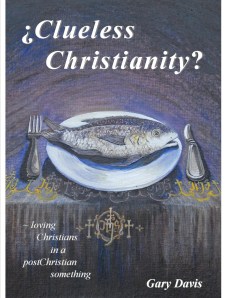
Cotton Candy Christians

cotton candy, christians, muslims, real, faith, genuineAbu Bakr al Baghdadi, the recognized leader of the new Islamic Caliphate-without-borders, accused those Muslims who do not support ISIS’ interpretation of the Qu’ran, as being “cotton-candy-Muslims.” His disgust with the mediocre state of Islam today drew him to support, sponsor, and now lead the Islamic State of Iraq and Syria.

His vehement declaration about Muslims drew me to ponder whether or not evangelical Christians in the West could be accused of being cotton-candy-Christians? How could normal people spot a cotton-candy-Christian? Some thoughts—

1.      Uses religious phrases to sound Christian and fit in.

2.      Cannot communicate in normal speech patterns to normal people.

3.      Freezes up when a “non-Christian” asks them about their faith. Gets all tight. Falls back on some pre-scribed formula.

4.      Remembers wrongs. Does not forgive, but pretends to.

5.      Knows little to nothing about what’s going on in the world but judges it nonetheless.

6.      Great at quoting Scripture, even when inappropriate.

7.      Is afraid of everything and everyone outside their Christian Bubble.

So then I wondered, How could a normal person spot a genuine Christian? Hummm, let’s see… .

1.      Their inconceivable capacity to forgive others.

2.      Enjoys the company of normal people.

3.      Celebrates life!

4.      Does not judge anyone. Anyone. Leaves that to God.

5.      Is gracious to a fault, sacrificing their own livelihood for that of others.

6.      Weaves their faith into conversations without intent; rather, with aplomb.

7.      Gives God room to work. Doesn’t strive to “close the deal.

There are probably many more observations of a cotton-candy Christian and a genuine Christian that could be added to this appraisal. Please send your thoughts on this to me. But, for now, I will leave you with this—

Which list more closely describes your faith?

For what it’s worth,

  Gary

Uncovering Christians at Christmas

Dr, Gary, Davis, Christmas, Christian, Clueless, faith            It is becoming more and more difficult find real Christians. We have been supplanted by the massive dismissal of genuine Christian and Biblical beliefs. Replaced, seemingly, by a preference for anything else. But this begs a question—  Why do we need to identify the genuine Christians in culture?

I’m not sure that we do need to identify other Christians in our culture. BUT…, genuine Christians should standout, in some positive way, more than our normal citizens. Some of the things my wife and I have done over the years are—

1.      Gathered our agnostic & atheists friends to join us in neighborhood caroling. Then we gather back at our home for good cookies, wassail, & hot cider,

2.      Distribute our excellent Christmas cookies to friends, of course, but also to the local businesses with whom we do business. If they are in retail, nothing beats a delivered pizza or salad.

3.      Sweeping off the snow & scraping the ice off cars of fellow employees at the end of the day.

4.      Shovel neighbors’ driveways. (note. This is not possible in southern Cal or Florida.)

5.      Providing child care, free of charge, for couples that need to escape for a while.

6.      Take $100, break it into $20s, and give it to random people. No reason.

7.      Give someone the gift of a creative teenager who can help wrap their Christmas gifts. (OK, we haven’t actually done this one yet, but we will. Promise!)

8.      Give hand-warmers to everyone!

9.      Distribute fine bottles of wine randomly; decoratively wrapped.

10.  Or eggnog.

Now, please note. Are any of these ideas especially Christian? No, not really. But we have found that these simple acts of Christmas kindness give rise to the question, “Who are these people?” A simple act that opens a window for a relationship of faith & trust.

So what do you do that is particularly Christian at Christmas?

For what it’s worth,

  Gary

Serving God

FromDr, Gary, Davis, Clueless, Christian, Serving, God, faith a definitively Christian point of view I have never understood the concept of serving God. It’s just odd, that’s all. Let me raise some of the issues I’ve face when I consider serving God.

1.      Just what does it look like? More likely than not it actually means serving other people.

2.      The very idea of serving God makes no sense. I mean, really, what does the Lord God of the universe need in our service? He created everything, maintains everything, and honors those who honor (fear) Him. He certainly does not need our service. It’s not logical.

3.      It makes more logical sense that He instead is calling to us to love Him. Of course, this raises a tricky question. If I were to ask you how you feel when you love your mother, father, wife, husband, or children, you could identify the shape of that feeling—what it “feels” like. In contrast, I would doubt you could identify the shape of your love for God. What does it feel like? What words describe the powerful emotional bond you have with the God Who made you? Get my drift?

More than likely, God has called us to love Him and to serve one another. Whether that service entails missional work abroad or in our own godless culture, in gathering basic food for the poor, the homeless, the destitute, it may or may not be reflective of our love for God. It may be a simple, humanitarian, act of love for humanity. If it is to last it will have to have a greater strength underlying it. For genuine Christians that underpinning is their deep love for God.

We are called to “love the Lord our God with all our heart, soul, and mind…, and then our neighbor as ourselves.” But the service we express toward Him should more properly be directed toward our fellow man (read, everybody). The inverse is, of course, true; that if we love those around us we also serve God’s purposes on this planet. But this is not simply splitting hairs. We are called to love our God, and that is something that goes beyond the cerebral, beyond the linear-sequential explanations of Truth or theology. It is an emotion. Does emotion have a place in your love for God?

Emotion is an aspect of our faith that we dare not leave at the door of a mental understanding of Christian salvation. It is an integral part of the whole package of faith, “heart, soul, & mind.” Passion has never been a mental motivation; it must rise from the heart.

In the future may you grow in your faith where you truly learn to love God with your whole heart, body, and mind. And may that love be exhibited and amplified in your service to the rest of this world.

For what it’s worth,

  Gary


Control Issues

Clueless, Christianity, Christian, Book, Dr, Gary, DavisControl Issues— re-basing the basics. This may sound funny, but I’ve often wondered if this propensity to want things nailed down theologically (beliefs), and the commiserate fear of emotion wasmore a reflection of many men’sdesires to preserve control over life’s myriad situations. Not control, in an exclusively bad sense, but control for its own sake, for some men’s personal sense of safety and identity. Often, as I enter into conversation with a pastor or someone I have just met, I find myself in a kind of out-of-body experience where I look down on the conversation from above and try to find the answer to a question— “Where does this person feel safe?” If you really want to get to know a person, try to discern where they feel safe. If you examine the last 400 or so years of Western Christendom you will find that there was an intense desire to nail down as much as possible theologically. Some nailing was definitely needed as the Church had become almost indistinguishable from the world around it. But after 400 years, the nailing seems to have become an obsession. The Roman Catholic Church is the one true church; the Church of Christ is the one true church, the Jehovah’s Witnesses are the one true church, the Mormons are the one true church. Why is it we have this drive to claim that we alone are right? Calvinism is the only complete theological construct: Dispensational theology has the corner on the End-times and the expanse of human history. Why is it that we have come to believe that our theological construct, our theological position on baptism, the Second Coming, or church government must be the most right one!? Could it be that these are issues of control? It may well be more than that; maybe it’s control for the sake of a personal, positional sense of safety. Most of us do have a keen sense of self-preservation built into us. When it comes to the church, maybe it is some men’s need for personal/positional safety that underlies the need to be in command. Controlling belief, which is quantifiable, and thus measurable, is easier to manage than human emotion. But fear of emotion because it is an unreliable reflector of an inner reality is as crazy as believing that making a statement about one’s beliefs is more reliable. In reality, it is the combination of our heart and mind that explicate this Christian condition within an individual. But there is one ingredient more— action.

When I was in the midst of my teens I remember my mother saying to me “What you do speaks so loudly I can’t hear what you are saying.” I know she was probably quoting her mother, but her point was obvious. In the office where I work we have all kinds of little witticisms that remind us of what we are trying to accomplish. One of these quips is— Talk’s cheap: action’s everything. In many churches I find that is exactly what we do … we talk a lot. Remember THE DECADE OF EVANGELISM? 1990-2000. Of course you don’t. Why? What happened in 1990? We discussed whether the last decade of the century really began in 1990 or 1991. And what happened in 1991? 1992? 1993?  Very little. The Decade of Evangelism just faded away. All talk, not much action.

To this writer there seems to be a tremendous emphasis in the church on understanding what you need to believe and very little emphasis on DOING anything with it. This is an imbalance; but it is not the kind of non-balanced faith I am talking about. If anything, Christians are a long way down the road in clarifying, refining, honing, and re-clarifying what it is we believe.  It just has not seemed to translate into very much action. Especially any that has any positive influence on the lives of those around us— those who are unaware that we are followers of Christ, those who have never seen a Bible (let alone opened one), and never darkened the door of a church. It’s time we revisited Jesus and read the stories about how He lived, where He spent His time, and how He related to those with whom He came into contact. Consider Jesus in two situations—  one where He is teaching, and another as He faces one of life’s typical conundrums— the conflict between completing a task…, and being side-tracked along the way. First, an example of Jesus’ teaching.

 1 And seeing the multitudes, He went up on a mountain, and when He was seated His disciples came to Him. 2Then He opened His mouth and taught them, saying:

3“Blessed are the poor in spirit, for theirs is the kingdom of heaven.

 4Blessed are those who mourn, for they shall be comforted.

 5Blessed are the meek, for they shall inherit the earth.

 6Blessed are those who hunger and thirst for righteousness, for they shall be filled.

 7Blessed are the merciful, for they shall obtain mercy.

 8Blessed are the pure in heart, for they shall see God.

 9Blessed are the peacemakers, for they shall be called sons of God.

10Blessed are those who are persecuted for righteousness’ sake, for theirs is the kingdom of heaven.

11“Blessed are you when they revile and persecute you, and say all kinds of evil against you falsely for My sake. 12 Rejoice and be exceedingly glad, for great is your reward in heaven, for so they persecuted the prophets who were before you.

13 “You are the salt of the earth; but if the salt loses its flavor, how shall it be seasoned? It is then good for nothing but to be thrown out and trampled underfoot by men. 14“You are the light of the world. A city that is set on a hill cannot be hidden. 15Nor do they light a lamp and put it under a basket, but on a lampstand, and it gives light to all who are in the house. 16Let your light so shine before men, that they may see your good works and glorify your Father in heaven.

~ Matthew 5: 1-16

Look at the setting in this passage of Scripture. It is outside, on top of a mountain, or at least on its slopes. It was probably warm, scenic, serene. Now look at Jesus’ style. It was not a “lecture hall.” Jesus was not debating or setting forth an argument. He was with those who trusted Him and would listen to what He had to say. And what did He do? He spoke to them where they were in life— poor in spirit, sorrowful, timid about life, hungry for God, in need of mercy, and so on. He was addressing the weak and painting a picture for them of what it would be like to make a difference in the lives of their friends and in their society. He gave them hope, He gave them a challenge to be the light of the world. To be bold—  to shine!

The next scene is quite different. Jesus had just crossed a lake when He was approached by Jairus, a trusted leader of the people. It went like this—

21 Now when Jesus had crossed over again by boat to the other side, a great multitude gathered to Him; and He was by the sea. 22And behold, one of the rulers of the synagogue came, Jairus by name. And when he saw Him, he fell at His feet 23and begged Him earnestly, saying, “My little daughter lies at the point of death. Come and lay Your hands on her, that she may be healed, and she will live.” 24So Jesus went with him, and a great multitude followed Him and thronged Him.

25Now a certain woman had a flow of blood for twelve years, 26and had suffered many things from many physicians. She had spent all that she had and was no better, but rather grew worse. 27When she heard about Jesus, she came behind Him in the crowd and touched His garment. 28For she said, “If only I may touch His clothes, I shall be made well.”

29Immediately the fountain of her blood was dried up, and she felt in her body that she was healed of the affliction. 30And Jesus, immediately knowing in Himself that power had gone out of Him, turned around in the crowd and said, “Who touched My clothes?”

31But His disciples said to Him, “You see the multitude thronging You, and You say, “Who touched Me?”‘

32And He looked around to see her who had done this thing. 33But the woman, fearing and trembling, knowing what had happened to her, came and fell down before Him and told Him the whole truth. 34And He said to her, “Daughter, your faith has made you well. Go in peace, and be healed of your affliction.”

35While He was still speaking, some came from the ruler of the synagogue’s house who said, “Your daughter is dead. Why trouble the Teacher any further?”

36As soon as Jesus heard the word that was spoken, He said to the ruler of the synagogue, “Do not be afraid; only believe.” 37And He permitted no one to follow Him except Peter, James, and John the brother of James. 38Then He came to the house of the ruler of the synagogue, and saw a tumult and those who wept and wailed loudly. 39When He came in, He said to them, “Why make this commotion and weep? The child is not dead, but sleeping.”

40And they ridiculed Him. But when He had put them all outside, He took the father and the mother of the child, and those who were with Him, and entered where the child was lying. 41Then He took the child by the hand, and said to her, “Talitha, cumi,” which is translated, “Little girl, I say to you, arise.” 42Immediately the girl arose and walked, for she was twelve years of age. And they were overcome with great amazement. 43But He commanded them strictly that no one should know it, and said that something should be given her to eat.

~ Mark 5:21-43.

Jesus had set his course toward the house of Jairus. Yet this ostensible interruption by an insignificant woman gives us more to consider than the simple completion of a task.  [I’ve often wondered…, was this planned? Hummm.]

I’ll not attempt extensive analysis of these passages, but taken together, they bring to light two seeming extremes in Jesus’ way of communicating. The Matthew passage contains the opening lines of Jesus’ SERMON ON THE MOUNT. In this passage Jesus is teaching. He is reviewing some of the life-principles that God has designed to give people hope when things no longer make sense. Remember, Judea was suffering under Roman occupation during the time of Jesus’ life. There were many Jews who were imprisoned and executed, so the cultural mood was somber, frustrating, fraught with anger and despair.  Jesus’ message offered hope of the most compassionate kind. At the end of the Matthew section, Jesus uses three images to remind His followers what they should be like— the salt of the earth, a light on a lamp-stand, and a city built on a hill. If you would allow me a digression …, those who are genuine followers of Jesus Christ are to be salt to preserve life and add flavor to it; we are to be light, to clarify the way to God; and we are to be like a city built on a hill that cannot be hidden, so as to provide a haven for hope and a goal to be reached.  How did Jesus envision that others would see these things in us? Through the sense of safety and stability that grows in us when we accept what God offers us—

  • Are you poor in spirit, discouraged—you will come alive in heaven.
  • Do you mourn at the loss of loved ones—you will know God’s comfort.
  • Are you timid, afraid—the earth is yours.
  • Do you hunger for righteousness within—it is yours!
  • If you’ve shown mercy—it will be granted to you as well.
  • Are you pure in heart—seeing God is your great gift.
  • Do you bring peace between warring peoples—you will be seen as my sons, says the Lord.
  • Are you being persecuted for Christ’s sake—great is your reward.

Do these words bring you hope, today, as you read them? Then you can understand some of what Jesus’ first followers felt as they heard them. There was hope. His teaching made sense, even though it meant being merciful to those who had raped your daughter or executed your father. How else are people going to see that followers of Christ are different other than through our lives and in the ways we wrestle with life’s common hardships?

Of Passion & Propositions

Clueless, Christianity, Christian, Book, Dr, Gary, DavisGrowing a non-balanced faith.

When I was in the final stages of producing my doctoral dissertation I ate out a lot. Escapism, most likely. During one such luncheon at Panda East, a fine Chinese restaurant in Amherst, MA, I opened a fortune cookie which read— Nothing worthwhile is ever accomplished without passion. I thought of some of the great names throughout history for whom this proverb has proven true— Hammurabi, Moses, Alexander the Great, Jesus, Christopher Columbus, John Harrison, Albert Einstein, Orville and Wilbur Wright, Vladimir Ilyich Lenin, Thomas Edison, Mother Teresa, Ronald Reagan, Osama bin Ladin, even Barrack Obama— all were driven by passion and tenacity to accomplish something beyond themselves. Yet, the church in North America seems driven by balance— balance in life, in our families, in faith, in our behavior— moderation in all things, no rocking the boat, no swimming against the current. Straight-forward, rational explanations of life should suffice to renew the mind and focus our resolve. It is almost as if being out of balance, off-center, or slightly extreme in any way is viewed as the real threat to the church and to the stability of our individual faith.

But if Truth is primarily personal (though certainly not exclusively), found in the Person of Jesus Christ, there are some very critical implications. It impacts our Christian lives, balanced or otherwise, and how we demonstrate our faith to others. If point and counter-point propositional arguments no longer dominate the apologetic of our faith, or even sustain the curiosity of the normal Western cultural person, then maybe it’s time to express our faith in ways not so idealistic or rational…, or not even so balanced.

As you continue reading you will detect a couple shifts. The first shift is one of approach.  We move from the historical analysis of the previous chapters to a thoughtful consideration of our present day dilemmas; from the BIG strokes throughout history, to a specific manifestation of one era, one geographic location, one time, one individual—Jesus Christ.  For in His life we can find the bridge between the preModern, Modern, and postModern perspectives on what it means to live in context within a specific culture. What I hope to do is to convince you of the importance of living your Christian life as Jesus lived His— in the context of whatever world you find yourself in. Right up front I want to admit that this chapter (okay, the whole book) is a polemic (that’s argument) for us to grow a non-balanced faith, a passionate faith, an exuberant faith that is in love with Jesus Christ and with the people around us. The personality of our faith must outshine itspropositions to give its Truth a proper context.

The second shift you will experience is simply one of writing style. The first chapters were data-weighted, historical, linear/sequential, and logical (A=B, B=C, therefore A=C, remember?). They were analytical; they stated a problem, built a case, substantiated an argument. We feel safest in the world of rational thought and logical argument. Most Christians feel safer in a world where rational argument, logic and words prevail. Why? Because the Western articulation of our faith was formulated not in the preModern Era that had an understanding of the spirit, of mystery and the heart, but in the Modern era, where logical consistency, scientific verification, and systematic cohesiveness prevailed. But modernism’s presuppositional perceptions do not ring as true within this postmodern era; nor do modernism’s assumed stances of the Bible as primarily a systematic presentation of Truth (excluding, of course, the incredible logic/debate style of the Apostle Paul).  The language of the Bible is, predominantly, one of story, of history, of pictures and images; and they each tell a story, they bespeak of a passion for God and of a passion for life. They lay down laws for the functioning of a society. They raise real-life problems that required real-life solutions. They burst forth in song in praise of God Almighty. They give us a glimpse of the struggles of the early Christian movement through the Gospels, through circulated correspondence, and individual epistles. Far too long have we limited the expression of our faith to the logical/sequential analysis of the Euro-western hemisphere of theological constructs. We have raised the Truth of the Bible above its context-in-life.  A saying I come across constantly is— “right beliefs produce right actions.” Have you heard it, read it? Sounds right on, doesn’t it? But in real-life it doesn’t quite work out that way. You and I know many individuals who claim the name of Christ, who believe the right stuff (or at least say they do), and whose lives reflect little of Christian character, compassion, or concern for the Truth.

Contrarily, there is the opposite, popular belief— you can’t trust your emotions. As if emotions are less reliable than logical/sequential thinking. The assumption is that emotions are fickle, not as locked down as logical, rational thought process. The logical thought process can be locked down more than emotion. Emotions, by definition, shift more readily than belief systems. But what good is one without the other!? It would be comparable to releasing a chemical analysis of kissing. So now you understand the complexity of kissing better; and this is helpful…, why!?! Where do we come up with this stuff—for a need for cohesiveness, control over minutia, consistency, for a need to believe that people always act on their convictions? [Sociologists have tested it – they don’t.  Even in church attendance.] I don’t…, always, do you? Remember, we all sin; we are all, at best, consistently inconsistent. Did this idea come from some male-ego approach that emotions are exclusively feminine and can’t be trusted? Men supposedly are the “logical thinkers.” Somehow this makes us more stable, more consistent. O please, spare me the stereotypes. Let’s face it, men are afraid to be out of control; and it is easier to be in control of thought than it is our emotions.

Read on Here

A Severe Mercy

 
A Severe Mercy
 (Harper & Row, 1977) chronicles the autobiographical-journey of Sheldon Vanauken and his wife Jean “Davy” Davis from their first meeting at Wabash College through their 17 years of marriage, much of which they kept secret from their parents. In Severe Mercy, “Van” describes his love for Davy as quite pagan; that is, they made a commitment to share everything with one another, to the exclusion of having children, since childbirth was something they could not share together.

They constructed what they described as the “Shining Barrier” that would protect their love and devotion from all external influences. But that Barrier was “invaded” (Van’s word) by Christ when they became involved with a small group of Christians at Oxford University. Davy was the first to “cross the room” to shift her primary alliance and become a committed Christian. Van crossed over later, albeit somewhat begrudgingly.

Then tragedy struck. Davy contracted a virus in the summer of 1954 that quickly took her life on January 17, 1955. She was 40 years old.

A Severe Mercy describes the agonizing struggle Van experienced after the death of his deepest love, partner, and wife. Through correspondence with Oxford Don C.S. Lewis, Van came to grips with this terrible loss, and learned that genuine Christian faith does not guarantee life-long happiness; rather, it offers the resident presence of the true God throughout all life’s twists & turns.

Throughout our own journeys it is true that all of us will find ourselves in places we never expected. We can prepare for some of them: but others will hit us like a bolt out of hell. Life will seem a flowing stream of pain, recovery, and rebirth. Some of us can pass through this progression better than others. Some of us never quite enter the recovery stage. Rather, we languish and fade in our own anguish.

We may believe, like Van and Davy, that we can erect a “Shining Barrier” of love, or isolation, or stoicism, and insulate ourselves from others, from the outside world, from being hurt. If you’ve been on this earth any length of time you know that does not work. But what does work? What can keep us from being hurt? What can protect us.

The simple answer is—nothing. The hurt, the betrayal, the pain, will all come. But the nurturing of personal identity and integrity, establishing a deep faith in God and growing deep friendships, goes a long way toward providing both genuine safety and security in those times of uncertainty. Remember, “… I will never leave you or forsake you.” (Deuteronomy 31:6)

For what it’s worth,

Gary

periphal faith

Peripheral– def. adjective.

  1. of, relating to, or situated on the edge or periphery of something.
  2. of secondary or of minor importance; marginal.

Peripheral vision is something we all desire to attain, whether consciously or unconsciously. Those conscious of their search enjoy a normative 160  of vision. They take in more than those who just stick to the straight & narrow.

When it comes to our faith, being able to see a more expansive picture is of great benefit. It provides the believer with greater perception into the depths of faith, and a clearer comprehension of how to face the uncertainties of the future. Studying Scripture, our world, cultures, and history conjoins our faith with those around us and with those who have gone before. It gives us a clear eye-on-the-world while establishing a rich safety in the heart of God.

Sadly, this is not true for every Christian. For most have merely a peripheral faith; that is, a faith that resides at the outer edges of their lives, which they only recall when reminded. Their faith is not central to their lives; it is far from their core, absent from the warp ‘n woof of their daily meanderings. They chose to be ‘Christian’ by designation, not so much by determination.

They may attend Church every week, or just at Christmas and/or Easter, or for the occasional funeral or wedding. When they exit the church, they discard their faith at the door, reentering their world of reality with little thought of their faith or the life-principles granted them in the Bible.

Consider this, if you embrace the name of Christ in any way, what self-evidence do you have which confirms that faith? Do you hunger to learn more about your faith? Are your prayers perfunctory or passionate? How does your faith spur you on to make a difference in our society, especially among the poor?

If you are a genuine follower of Christ, your faith will not fall on the periphery of your life: it will seethe with energy and power at your core. It will make a great difference in your life: and you will make a great difference in our world.

For what it’s worth,

Gary

BESA

How many people would lay down their lives for a stranger? This is the question addressed by film makers Norman Gershman & Stu Huck in a documentary released the last weekend of July at the San Francisco Jewish Film Festival— BESA: the Promise. The film tells the story of Albanian Muslims who saved the lives of more than 2,000 Jews during World War II. They did not hide them in basements or attics; they took the Jews into their families, gave them Albanian names, and sacrificed their lives for them in some cases.

The question arising from their actions is a clear WHY? Why would Albanians, Muslims, shelter Jews, at the risk of their own lives, during the Nazi occupation of their country? The answer is “besa.”

Besa is a part of the Albanian Code of Honor, embedded throughout their generations. It is usually translated faith, with a reflection on personal honor to keep a promise, at any cost. In their Moral Code (the Kanuni of Lekë Dukagjini), they have a saying “Shqiptaret vdesin dhe besen nuk e shkelin” (Albanians would die rather than break honor). One Albanian interviewed said he would rather sacrifice his only son than break an honor— besa.

The Albanian idea of besa should be acclaimed and lauded among all nations. A documentary of how the Albanian Muslims sheltered German Jews and made them part of their families is long overdue. BESA: the Promise is a must see film for all— Jews, Muslims, Christians, even atheists.

It would be a disservice if I did not leave you with at least two points to ponder—

  1. Would you lay down your life for a stranger?
  2. To what extent does a code of honor influence your decisions and actions?

We have a saying at the company where I work—

Honor God: honor people. Make a difference.

‘Nough said,

Gary

fireheart

The flame ignited, burning hot, passions flaring, intensity glowing, depth and elation stretching the limits of reason, mind and body. Your heart is racing, blood pumping. You are ready. You are on fire! Inextinguishable energy personified.

But there is another side. Burned. Emotionally, physically, to the core of your being. Trust destroyed. Energies extinguished. Your heart a pyramid of embers, not even smoldering. Or, ruthlessly smoldering with rage.

The heart holds such sway over human nature. Kingdoms have been built, flourished, defended, and lost because of visions dreamed and passion abated. Great art and great destruction have flowed from its river. The heart is a burning flame with the capacity to inspire or enrage. If crushed, its restoration is costly, both in time and effort. For a wounded heart is reluctant to let even its possessor near.

So what is it that ignites this simple organ, this muscle that calibrates and controls the flow of our life blood throughout our body? What is it that transmutes it from a simple body part into our source of passion and power? What enflames it to become a fireheart ?

1. A Challenge. Whether a problem to solve or a situation to resolve, or a task to be accomplished, it is only a burning desire within that is formidable enough to achieve a triumphant outcome.

2. Anger. Some things should get us so mad that we do something about it; not in retaliation, but in sensible reactions that resolve issues.

3. Intense Fear. The fear that cripples so severely may also serve as the catalyst that launches our hearts to fight. Use fear: do not give into it. [Note. Soldiers at war, in face of imminent death, have moved from mere men to heroes when they faced this fear.]

4. Faith. Believing that something is right and worth living for is an inspiring launching pad for great accomplishments. IF you truly believe in it. And act! [Note. Many genuine Christians have given their lives for what they believed; fewer agnostics or atheists have done the same.]

One final point to ponder— Is your heart a fireheart? What are you doing about it?

Have a nice week,
Gary