New Eyes of Faith

  Ever notice how your eyes have to adjust when you move from a light room to a darker one? It takes the eyes longer to make out shapes, figures, and people.

       Going through a transition in life into a new phase is similar. You can’t quite make out the new images and shapes of faith you need to adapt to. You truly must become a new person.

       For most of us, God calls us to new shapes of faith throughout our lives. Sometime, those new shapes are simply a rolling over from our last shape of faith. Other times…, not so much. Deeper faith is always a challenge.

       And, there is no going back to the way you were. NO WAY. Your only way out if forward. It’s like going from the light into the dark. You need time to adjust to who you will become now.

      Retirement is definitely a move from light to dark, where the future is not so clear. Things will take time to become clearer.

       So, whatever you are going through now will have to face new images of you, new ways of seeing things. The shape of your faith will have to adjust to this new reality.

       Some of the things we will have to change are—

1.      How we use our time.

2.      Deciding what our new priorities should be.

3.      Changing friendships, meeting new people.

4.      Adjusting to a lower income.

5.      Becoming more just-the-two-of-us.

6.      What it means to be Christian in this new Quantum Era.

       As I’ve aged things I did not understand in my 20’s, 30’s, and 40’s are now making more sense. You will find that in your life as well.

       Progressive perspective.

       If we do not adapt to these new realities we will become stuck in our old ways. There may have been safety there— But we cannot stay there.

       Adapt. Adjust. Become something other than who/what you were. Jesus had to when he came to earth.

Find hope my friend, in the God Who knows you,

Gary

NEXT– thoughts on moving beyond.

Afterthoughts – Wearing out

      We try to plan for it. Schedule breaks so we are prepared for it. But it usually just sneaks up on us. After a vigorous workout, a mentally challenging confrontation, or raising kids, we get to a point where we are simply worn out. New York traffic or the New Jersey Turnpike will do the same thing. We have all come to a point where there is just nothing left.

       We start to feel like well worn tires with very little life left in them. If any. Our life isn’t over yet, but it sure feels like it. Retreads are not the solution.

       I’ve had many times in my life where I simply could not go on. Taking a nap helps, but not always. [I’ve always had a terrible time shutting down my mind.] Why? Because the issues I face are still there, gnawing away at my heart, at my strength.

       In more recent days I’ve also deal with my old nemesis— depression. And my residual postcancer treatments also take a toll on me. Ah, the joys of aging! Ugh.

       So what can any of us do about wearing out?

       For one, keep active. I don’t mean start exercising when you retire at 65, but throughout life. The later you start, the harder it gets. Trust me.

       Get outdoors more. Sunshine, hiking in rain, overnight in a tent. All great things to do. Or, at the least, a game of tennis or round of golf. Avoid Bingo! You, know— sitting on your… .

       Grow new friendships. The old ones will stay there, or not. But new Friendships are like starting over.                                                       READ! I’ve developed quite a hunger for new ideas. My wife still loves her British murder mysteries, but, for me, ehhh, not so much. I’ll take a good cultural analysis any day.

       Spend more time listening for God to confide in you. You’re never alone. Get used to it. Our God is always just a heartbeat away. Sometimes, when you least expect it, He will ask you if you have any time for Him.

       Say yes.

       The other thing I do to keep from wearing out is to change my routine. At this stage in my life I find that “regular” is not the best for me. I feel trapped. Oh, except for going to the gym. THAT is a must M-W-F!

       Also, try new things. Ever been skydiving? Me either. But I sure wouldn’t mind. OK, too much? Try Israeli food or taking a course in geriatric personal defense. How about going for another college degree?

       On the other side— just take a rest! However you rest…, do that.

       There are so many ways to rest. Above all, stop striving! God may not be finished with you…, yet; but that doesn’t mean you have to do more.

Gary

NEXT —  CLUTTER!!!

Afterthoughts – Who am supposed to be in this stage of life?

       Throughout life we should all be asking the question—  Who am I now? But we don’t. We casually continue to go to work, drink, play, have relationships, end relationships, and start new ones. As if simply by rote or ecstatic event.

       We celebrate new birth, commemorate special occasions, mourn loss, cry, laugh, go flat. It’s just all a part of life on earth.

       Unless we are cognizant of it, we may miss that our world is changing. Likewise, we need to keep track of ourselves— that we are changing as well.

       So who are you? What are the components that go into you, being you? Now. Not what used to define you, but what defines you now?

       Erik Erikson, an American/German Psychologist, has set forth this classification—

·       Infancy·       Toddlerhood
·       Preschool years·       Early School Years
·       Adolescence·       Young Adulthood
·       Middle Adulthood·       Late Adulthood

       If (and I do mean if) you mature just a little more in each phase you will give up your earlier toys, develop new friendships, set goals, deepen relationships (& give up others), figure out who you are, change, grow a family, learn it’s not-all-about-you, and pass along what you have learned to the next generation. Admittedly, this is a very simplistic progression.

       But not all of us are aware of these phases and transitions. We know that graduating school, at whatever level, is a milestone. So is marrying. So is that big promotion or salary increase. And having children changes EVERYTHING. Still, the changes that happen around us could blind us to the changes we need to face.

       Busy lives.

       It’s so easy to get lost in life. In our work. In ourselves.

       So what are you doing to keep track of yourself? Here are some guidelines.

1.      If you set goals in life, how are you doing at completing them?

2.      Areas where you are weak— what are you doing to strengthen them?

3.      Places where you shine. How can you keep on shining and be humble about it?

4.      What kind of support team will you need next in your life?

5.      Can you admit wrong? What do you do about it?

       To move into the next (healthier) phase of your life, you will need a safe place for refreshment. What is it? Truly, God will provide one it you ask. Ask.

Gary

Next – Wearing Out

After There’s Nothing Left: Digging Through the Dirt

Shovel in Dirt

         Scrutinizing who you are as a person will create a richer point-of-clarification of who you are to yourself and to those around you.

        This point-of-clarification happened to me somewhere between ages 38-40. My wife and I had just gone through some of the most devastating experiences of our lives— the loss of a pregnancy, the loss of a livelihood, the loss of close friends and coworkers. Add to that my impending surgery for TMJ (Temporo-Mandibular Joint Disorder), which turned out to be very painful, and you can imagine our distress and discouragement. We were at the bottom of our lives. It became apparent that I had given up on living any kind of productive, useful, (let alone) creative life ever again.

      But, somewhere in the latter portion of my 39th year of life I got mad, really mad— at myself and at the world around me. I fought every corner of myself, and a few other nay-sayers, to make a difference in this world. Again. What happened next astounded even me. My wife and I founded NEEDinc. Initially an evangelistic ministry that “tailor made” an evangelistic approach more suitable to our New England environment and culture.

      I was alive again! My soul refreshed, my vision clear, my purpose rising ahead of me. I committed myself and all that we had to this new venture of training Christians to make sense of evangelism in the new, emerging postModern/postChristian world.

      Soul Confession behind me, I began digging in the dirt clarifying what I was all about. For Soul Clarity involves a focus on a future path, of how and where to expend energy. It asks questions like—

What am I designed to do in the next phase of my life?

Where does God want me to spend my strength to make the most difference?

      Everyone will come to a point in their journey where the question of what NOT to do is as important as what TO DO. Options DO change as wisdom increases and strength diminishes. Again, seeking the perspective of others who know you seems an advisable path.

      Having founded and incorporated NEEDinc, we next constructed a Board of Directors. From Day One, NEED’s Board of Directors has provided me with consistent guidance that has kept me on the straight & narrow. Ok, not so straight, definitely not narrow, but definitively on a path which fulfilled the Mission of NEEDinc, and suited God’s design upon me, my strength level, and a course of action that kept me on track. Thank God for the critiques, criticism, caring, and cautions of friends!

      For the only ways to clarify what you are designed for is—

  1. To take risks, in fear & faith.
  2. To listen carefully to the advice and criticism of those who know you best. (Including testing.)
  3. Assess whether what you believe about yourself is proven accurate in the evaluations of your efforts.
  4. In the affirmation that comes directly from the God who created you.

      Soul Clarity works in two ways: first, to wash clean all the junk that has clouded your vision for so long; and, second, to grant you clear vision and long range sight. (2 Peter 1:11). Still, I must add that you will not continue to see things clearly if you clutter your purpose or cloud your vision with peripheral projects. There are many good and great things you can do. But what is the ONE THING you MUST do, no matter what? THAT is the question. Or, that is THE question we all must answer if we are to have a purpose for our existence.

      Some lingering depression may still be there; but it will be couched in a revitalized purpose.

Digging deeper,

Gary

Dr. Gary Davis, President

NEXT— After There’s Nothing Left— the incredible lightness of being.

excuses, excuses, excuses!

no saw“The cross solved our problem by first revealing our real problem, our universal pattern of scapegoating and sacrificing others. The cross exposes forever the scene of our crime.”

Richard Rohr,  Falling Upward: A Spirituality for the Two Halves of Life

A more intricate way of saying BUT we’ve come to know as making excuses. We all do it; we’ve done it from the Garden of Eden onward. [Am I my brother’s keeper?] The dog ate my homework. Really?!? And we actually believe people will believe us.

To be sure, some excuses are legitimate. The dog and nuclear holocaust are not one of them. The funny thing is that we make excuses to God for the things we’ve left undone, or for the things we’ve committed ourselves to do and haven’t. It’s one thing to say you’ll take out the trash or cut the grass; it’s quite another to swear an oath, or make a promise to God and not follow up on it.

This can become a very dangerous game with rather austere consequences.  DO NOT PLAY.

Psalm 15, a psalm of David, puts it quite eloquently for us—

1 Lord, who may abide in Your tabernacle?
Who may dwell in Your holy hill?

 He who walks uprightly,
And works righteousness,
And speaks the truth in his heart;

 He who does not backbite with his tongue,
Nor does evil to his neighbor,
Nor does he 
take up a reproach against his friend;

 In whose eyes a vile person is despised,
But he honors those who fear the Lord;
He who swears to his own hurt and does not change;

 He who does not put out his money at usury,
Nor does he take a bribe against the innocent.

 He who does these things shall never be moved.

I’ve highlighted the phrase that we all need to take to heart…, and put into practice.  No excuses.

NEXTHonor God, honor people…, make a difference,

Making a Difference

jfk quoteHappy New Year!

     There’s a line in the movie The Greatest Showman, that came out Christmas 2017, which stuck with me. It’s actually a quote from P.T Barnum, played by Hugh Jackman in the movie.


“No one ever made a difference by being like everyone else.”

     Too many of us, trying to fit in, actually merely blend in. We become part of the background while others step forward. We react to what is going on around us rather than initiating actions that will matter.

     In the progression of history, we are living in a hiatus, a time between times. If you think of time as a series of phases and transitions, we are in a transition, about to enter into some new yet-to-be-defined reality. What a great time to be alive! We get to write the definers of the next age, of the next paradigms of human perspectives.

     The great thing about transitions is that we cannot turn back; we must forge ahead.

     Sadly, too many of us want to live in the past. We’ve entrenched ourselves in the belief that the past was more secure, more stable, safer. It is change, the new, that is to be feared. Really!?! This is why our schools & colleges should require a course in HISTORY, no matter what your major. We have lost our way.

     Christians have taken the sports mantra No Fear and turned it into a tee-shirt— Fear not… . [Isaiah 41:10] Yet we Christians seem more afraid to face change, to face the future, to face our world’s fluctuating foundations and values than anyone. What’s with that, anyway?!?

     The genuine Christian should not strive to fit in, to blend. Rather, to make a difference in the world; from the lives of those around them, to the world arena. Let’s step forward and be counted.

     So instead of New Year’s Resolutions, make action plans; instead of setting personal goals, set people goals. Who will you help? Who can you love like Jesus? Who can you pass on your wisdom to? And don’t tell anyone. Just do it.

Make a difference,
Gary
Dr. Gary Davis, President

www.CluelessChristianity.com  

NEXT TIME~ a consideration of postChristian apologetics

Ready, Fire, Aim!

merida_disney The rate of change during the twentieth century had a greater velocity than any century before. The certainty of how things worked was based on the assumption of continuous change— that is, that things change, but they have some connection to what has gone before.

     We are now in a transition of discontinuous change— that is, too much has changed, so rapidly, that it has little to NO connection to what has gone before. We have been in a paradigm shift from what was to whatever is to become.

     If you feel like you can’t seem to keep up, well, you’re right. You can’t. In industry, technology, communication, and nations it is no longer READY, AIM, FIRE. From here on out it’s READY…, FIRE…, AIM. 

     Let’s take a look at some of the sign posts that mark this present time period. Most scholars deem this era a postChristian era.

  1. postChristians trust in their own judgment rather than in traditional authority or group consensus.

            People no longer trust in BIG— organizations, traditional institutions (read the church), or business. Judgment starts and stops with ME.

  1. Young people conform to their generational peer values.

            The TV show FRIENDS was a fair representation of this. (Binge watch them all on NETFLIX.) Or, NEW GIRL, with Zoe Deschanel. Amidst the convolution of individualism and personal values there remains this hunger to be accepted. They are upbeat, positive, and do not like to be compared with older generations. Actually, they do not like to be labeled at all.

  1. Today’s generation seeks meaning in service, doing, living-life vs. becoming couch potatoes.

            They want to be part of a thriving, working society.  They want to make a difference in our world, they want to have an impact, leave a mark. They are not as rebellious as Boomers or later Busters (GenX). With no internal guidelines to provide perimeters for behavior, most perceive life as a challenge to be figured out, conquered, and shaped.

  1. Postmoderns are more visual than linear-sequential. They “think” in music. They visualize life more than they analyze it.

The emerging generation in this early twenty-first century have grown up with TV, DVDs (now passe), YouTube, Gaming, Smartphones, Snapchat; and 3D movies with special FX. All has evolved to produce a truly visually-connected generation. “Imaging” a reality makes more sense than stating that reality in a logical, linear form. Words have lost their reference points for most of this generation; unless they represent a visual image in their mental milieu.

  1. Twentysomethings create personal truth-value systems to make sense of life.

Having witnessed moral failures in the church and the ethical failures of our government and sports figures, most have lost all their confidence in external institutions to provide them with a basis for making sense of life. So they look within themselves to create truth-value systems that need only work for one individual, myself. They bond with other like-minded individuals intimately. Oh, you believe in a god/God?  That’s great; I’m glad it works for you.  My personal truths/beliefs work for me too. ‘Nough said.

  1. Emerging leaders value experience-based truth over propositionally proclaimed truth.

One of the byproducts of an exclusive reliance on personal truth-value systems is an eventual abhorrence for anything nailed down, especially written. Writing something down makes it binding, authoritative, final. They want to move with the flow, the immediate, the next, and the synthesis of the experiences and insights of life. Propositionally stated truth usually flows out of institutional conclaves; they are not to be trusted. Personal experience is the producer of truth and Truth (if there really is the latter).

  1. They seek a spirituality within as a Life-Reference point, rather than outside of their inner world.

In a conversation with one of my 20-something friends I was taken back by his surprise that I “needed a god” to support my spiritual self. He responded,“I don’t feel any need for an external reference point for my spirituality. It comes from within.” postChristians hold little confidence in historical religions, especially Christianity. Not only do religions write everything down, they are insistent on the supremacy of words over life. Thus the church makes little sense to them. “Christians don’t seem capable of living life.

  1. Our emerging culture resonates with transparent, caring people whose lives reflect an inner integrity.

Well, frankly, who doesn’t like these kinds of people? They have a lightness about them that is infectious. Whether it is from some inner urge to escape and play or a zest for experiences that radiate with life they inspire those around them. But they don’t put up with any crap; they don’t play the games of social niceties. They expect those they meet to be up front with them, honest about life, open with their ideas, even when it might elicit disagreement. They resonate with positive, upbeat, transparent people in any age category. (Informing them that they are sinners before a Holy God is NOT an understandable starting point. So, what would be?)

  1. PostChristians are very picky about how and with whom they spend their free time.

Got any free time with nothing to do? Right, neither do I. So also with the postmodern set. Life is f-u-l-l, VERY FULL! Every given chunk of time is packed with work, play, and appointments; going, going, going more and more and gone. The work-force set has very little time: take a number. The college/grad school set can’t pack any more into their lives. And the junior/senior high school crew should really use the calendar sections on their cell-phones. Get the picture? If not…“have a good-one.

So… !? How can the Christian message ever make it into the lives of people who don’t trust traditional institutions, especially the church, don’t relate to linear/sequential propositional Truth, who construct value systems based on their own experiences (exclusively), who don’t like the arrogant authority of written codes and beliefs, and who find a spirituality within themselves with no sense of a need for any external reference point? AND they don’t have any time for you. Does the word conundrum come to mind? Hummm.

            Well, please forgive me, but this conundrum excites me! What a great time to be a Christian in western society! We are truly living in a postChristian era— a culture that thinks of institutional Christianity as having already been tried— and found wanting. So much has changed. If you are a Christian, and you are alive, you have an opportunity to make one of the greatest contributions to human history— to participate in reshaping the interface between the Christian world and our postChristian culture.  You’ve gotta love it!

So, again, now what?!? READY! FIRE! AIM! Absolutely!

  Gary

Trouble Transitions

Gary, Davis, Christianity, Change, Trouble, Transitions          Far too frequently we hear the cry that our society needs more change agents. The implication is that the way things are presently just isn’t good enough. Pick a field— politics, business, transportation, medicine, religion (especially Christianity), finances, yadayadayada. Everything needs some form of change.

            The problem with change is that it invariably dumps us into a transitional time where even more things become unclear, unsteady, and iffy. O joy. Just what we need— more instability. Well, actually, we do.

Transitions in any segment of life move us out of the predictability, safety and definitions within one life-phase into an arena of uncertainty, a transition.

Transitions aren’t necessarily marked by growth. Though most people would hope they grow within a transition, many people, and businesses flounder, unable to set a new direction, given the changing global circumstances or personal situation. But without the cloudiness of a transition, things would stay too-much-same.

When you think about it, the cycle of phases and transitions, phases and transitions, is constant throughout your own life, or the life of a company, or country. The shifts are marked by what Malcom Gladwell has declared as tipping points— literally, those events or experiences that push us right over the edge and force us to consider something else in the future…, or tomorrow, or next week.

So when you consider becoming a change agent also consider how it will affect you, personally, your business, your family, and the greater good. Do you want to create the circumstances that lead you and those with you into a transition?

Transitions are uncertain times. Just make sure you are ready for the fog that lies ahead. But, by all means, keep moving forward. Besides think of all the fun constant predictability takes out of the adventure we call life?!?

For what it’s worth,

  Gary

Pope Francis in America

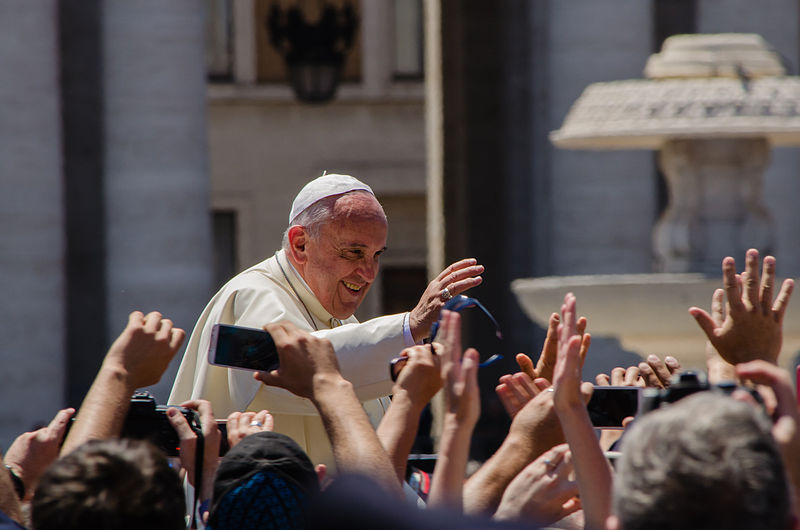
Pope Francis, Gary Davis, 365Christianity, Christians, Clueless, Culture, Alfredo BorbaAs only the fourth Pope to set foot on American soil, Pope Francis has sparked an interest in not only the Christian faith, but in all religion across this land. Questions like, What do I believe? Do I really believe what I say I believe? What parts of those beliefs affect my life on a daily basis? And on a larger scale, What is our responsibility to the poor, the displaced, the strangers in our midst, and those of other faiths? Or, yet again, What is our responsibility to climate change? How can we handle the economic inequity across the globe?

 On September 23rd, in his speech before a joint session of Congress (http://time.com/4048176/pope-francis-us-visit-congress-transcript/), Francis graciously summarized & tackled two major areas of concern we need to address— CULTURAL ENGAGEMENT and CULTURAL WASTE.

 On the matter of Cultural Engagement, he encouraged all Christians, everyone in the United States, and everywhere, to solve the world crises in immigration, of refugees in the Middle East and Europe, to seek solutions to seemingly unending regional conflicts, and to learn that differing cultural perspectives can actually serve to improve the human race rather than to further divide it. We all must engage people who are different from us, for our own sake. Otherwise our differences will lead to misunderstanding and misunderstanding to mistreatment and war. We must end our isolationism.

 On the matter of Cultural Waste, Pope Francis’ deep concern was not only what we all are doing to our environment through national industrial pollution and waste byproducts, his concern was primarily with our attitude toward the humanity of humans. He called for an end to treating illegal immigrants as numbers, and called for an attitude where they are simply people, seeking a better life. He called for governments worldwide to find a solution to the massive migration of people from the Middle East and Northern Africa fleeing for their lives and for safety to European and Western borders. We dare not turn our backs on them because of their massive considerable numbers; they are people.

 His admonitions should move all of us to contact our Congressmen and Representatives to STOP ignoring these tragedies as if time will simply take care of them. It will not. WE must take care of them as if God is demanding that we do it. I couldn’t agree more.

What are you being called on to do to make a difference?

Getting lost

Lost, Thoreau, Dr, Gary, Davis, Clueless, Christian, risk, reflectionMost of us, at some time or another, will get lost. It may be as simple as getting lost on back roads or forgetting where your glasses are; or, more seriously, getting lost in life; that is, losing your sense of direction, purpose, and/or identity. In short, you no longer know where you are, who you are, or where you are heading.

A dead stop.

In the midst of that empty confusion certain questions start to arise—

How did I get here? What could I have done differently? How do I start to dig out of this mess? More importantly— How do I find myself again? Who am I now? What do I do next?

Anxiety starts to immobilize your spirit; you cannot take any action for fear of further failure. But you have to do something. Anything! Here are some of the things I’ve done when I’ve gotten lost.

1.      I start taking small steps. What are the little things you can definitely accomplish that will bring some semblance of stability or order to your life? Do that. Then do another one.

2.      Keep in mind that when you are lost everything is a risk. Things you used to do as a simple matter have now morphed into insurmountable monsters. Nonetheless, you must face those monsters to overcome them. I had to. And I corralled a cadre of friends to stand by me as I faced them.

3.      Don’t ask God to do for you what you must do yourself. He is definitely in charge. But we are not mindless robots. He expects us to act responsibly with the time He has given us.

4.      God can’t direct a parked car. Start moving. If it’s in the wrong direction, He’ll redirect you.

5.      Establish NEW points of reference for your journey. The former points of reference are gone; you’ve already passed them. If you want to find your way again, you’ll need to discover a whole new set of reference points to guide you. I find I need to cut back on my activities to give my mind, and heart, time to process the mental & emotional shift. What will most likely be the next sign along your path that you are getting back on track?

With all the variables we have to juggle these days it’s easy to get lost along the way. You have to work hard to get back on track. So get to it. Drive! You will not stay lost for long. [Proverbs 16:3.]

Honor God, honor people…, make a path,

  Gary