
What’s Happening to Us? Time Alone

861750526_640x360  In this technological age, very few of us get the time alone we need. We neglect relationships and people in favor of time online with media, games, shopping, researching, reading, learning, and plain ol’ WEB-trolling. If things at home are difficult, we tend to immerse ourselves in work: if things at work are unpleasant, we run late, or are sick a lot. We fill our lives with entertainment and escape to avoid the harsh realities in which we move.

     With our present Coronavirus, Covid19 Pandemic our local, state, and federal governments are intentionally enforcing time alone. While a cure is being sought, we have switched to a defensive posture of confinement to curb the spread of this widespread disease.

     The Influenza Pandemic of 1918 – 1919 killed between 20-40 million lives worldwide. In America more than 675,000 died. This present coronavirus is ten times as lethal as the influenza of 100 years ago. Our present options are middling at best— isolate…, and wait for a breakthrough.

     So, what are we to do with all this alone-time forced upon us? Here are some options—

  1. Stay healthy! Eat healthy foods. Maintain some balance of exercise and rest. 10 minutes a day.
  2. Get to know yourself again. What are the really important issues you need to think about? Journal?
  3. Get to know your family again. Board games. Seriously.
  4. Serve others. Care for people who can’t or won’t go out.
  5. Be an Encourager. Pray over the phone with people. Send e-cards, bad jokes, emojis.
  6. Do not hoard. This is crazy people. Instead, share your resources. Especially toilet paper.
  7. We are all going to have to trust in God more…, even atheists. Ultimately, He is the one in control.
  8. Use wisdom and caution in all you do.
  9. Gather in small groups. Food. Movies in. Worship.
  10. Don’t forget to take care of yourself. Our God is full of surprises… .

     For some of us, time alone is the norm. For others, not so much. We are all experiencing this COVID19 pandemic differently. Many lives will be lost. Maybe even yours. Get your affairs in order and your relationship with God in a safe, forgiven, restored place.

     These are the times when genuine followers of Christ can make a great difference in peoples’ lives.

     One final thought— think of giving the gift of toilet paper to your friends & neighbors.

Honor God, honor people…, make a difference.
Gary

Dr. Gary Davis, President

NEXT— What’s happened to us?  Fear of engaging
What’s happening to us?

paradigm-shift2

     If you haven’t noticed, the Western world is in the midst of another paradigm shift. This time from a modern, scientifically verifiable facts, to a  postmodernpostChristian view of reality that is not related to facts or history or consents to “Ultimate Truth.” They say there is no such thing. How can they know that?

     Of course, I truly hope the people who designed this 737, and those that built it, were not so inclined but adhered to the laws of physics and flight…, especially the landing part.

     Most of us live in a world that relies on the dependability of continuous change; that is, new things are usually predicated on earlier ideas or inventions. But in a paradigm shift we experience an occurrence of discontinuous change. The NEW things are not connected to the past in any way. The automobile had as much to do with horse transportation as our smart phones have to do with landlines.

     The expressions of the Christian faith are going through a time of discontinuous change in our society. Although we hear many Christians cry for the old-ways of the liturgical calendar and liturgical worship, the fact remains that the format of faith constructed in the 400s or 1700s is not designed to face the assaults of this postChristian sensibility in which we life.

     Still, other Christians today, decry the loss of our “old-time religion.” They tell us that today’s contemporary worship service, with its culturally affinitive music and come-as-you-are mentality is nearing its end. Really?!? Oddly, Paul in his missionary journeys never considered NOT adapting his style or methodology to each new situation. Read Acts! Read Paul’s Letters! Nor did the earliest missionaries to the Far East, or to the Vikings.

     The Christian message should always couched in the idioms and formats of the host culture. When we try to import 17th century European Christianity to other cultures if always backfires. And that includes the postmodern/postChristian landscape in which we find ourselves today.

     There was nothing particularly sacred about the 100s–400s. Although a lot of Christian beliefs and practices were established in that period. Nor was there anything sacred about the 17th century. Why do we constantly try to return to their expressions of faith as if they had something we do not!?!

     We have the privilege of formulating new, multifaceted expressions of our faith for this time, our peoples, and for a world more closely woven together. Let’s get at it!

Honor God, honor people…, make a difference,
Gary

Dr. Gary Davis, President

NEXT disruptions & tenacity—  pass on, not out.

tenacity & disruptions – pass it on

Passing-e1470776100537   You therefore, my son, be strong in the grace that is in Christ Jesus. The things which you have heard from me in the presence of many witnesses, entrust these to faithful men who will be able to teach others also. Suffer hardship with me, as a good soldier of Christ Jesus. No soldier in active service entangles himself in the affairs of everyday life, so that he may please the one who enlisted him as a soldier. Also if anyone competes as an athlete, he does not win the prize unless he competes according to the rules. The hard-working farmer ought to be the first to receive his share of the crops. Consider what I say, for the Lord will give you understanding in everything. 2 Timothy 2. [NASV]

     Let’s move on to reflect on the ideas in verse 2. For one, Paul had a sense that it was his responsibility to pass on to Timothy what the Lord had taught him. Probably out of love for the boy (a young man in that culture) But also out of a sense that the message of Christ needs a community context. For we are called to learn from our Lord, through Scripture, about the ultimate realities of this universe and our role in how they play out. And we are called to make a difference, to entrust what we learn to faithful men who will be able to teach others.

     This process is a selective one. Sadly, it implies that we are not to waste our time with people who do not want to learn; nor do they want to pass on what they’ve learned to others, let alone others who can teach.

     You’ve met them, so have I. They just want more with no intent or plan to pass it on. I presented a series of lectures on Christianity & Culture at Columbia University in NYC some years ago. When I finished they were eager to have me return so they could hear more. I said no. Why? They hadn’t utilized anything of what I’d already taught them to make any difference in their surrounding university.

     It’s great to have friends! I love the ones who put up with me. J But I want to invest in people who will take what I have taught them, ponder it, and put it to good use.

     My ever faithful Problem Solver, Melanie Lamere, left a note on my desk reminding me that my legacy was the changed lives I had left behind me all over the world. “Forget your books and writings. It’s the people you’ve left in your wake who will make a greater difference after you’re dead and gone. Get over it.”

     So…, are you making a difference for Christ in this world? How? What are you passing on? What are you leaving behind?

Honor God, honor people…, pass it on,
Gary

Dr. Gary Davis, President
NEXT disruptions & tenacity—  suffer hardship

Tenacity & Disruptions

disruption_680  For some time now, since the mid-1800s, I’ve been immersed in the letters of Paul to Timothy; especially 2 Timothy. Ergo, we are going to enter into a series of considerations on 2 Timothy 2. I’ve titled this series Tenacity & Disruptions, for, as you know, we are often interrupted in our Christian journey by things that draw us away from our focus and our faith. So…, let’s get started.

     You therefore, my son, be strong in the grace that is in Christ Jesus. The things which you have heard from me in the presence of many witnesses, entrust these to faithful men who will be able to teach others also. Suffer hardship with me, as a good soldier of Christ Jesus. No soldier in active service entangles himself in the affairs of everyday life, so that he may please the one who enlisted him as a soldier. Also if anyone competes as an athlete, he does not win the prize unless he competes according to the rules. The hard-working farmer ought to be the first to receive his share of the crops. Consider what I say, for the Lord will give you understanding in everything. [NASV]

     So, let’s get started. You therefore, my son, be strong in the grace that is in Christ Jesus. It should be obvious that there is a prior relationship between the writer, Paul, and Timothy. It is a close one too. Son, Paul calls him. The first thing Paul directs him to do is be strong in the grace that is in Christ Jesus. Why? There are so many disruptions in the Christian journey that Timothy, like us, needed to be reminded to be strong in the grace that is in Christ Jesus.

     Our tendency is to be strong in our own strength. One of the banes of our lives is that we are quite capable of getting things done on our own with little to no dependency on our Lord. We are perfectly able of operating on our own without any reliance on the grace God has provided. I, for one, am most prone to this weakness. If there’s one thing I don’t like about the Christian life, it is having to have faith.

     What about you? Is it difficult for you to find your strength in our Lord’s grace? Or are you quite capable? Is it possible you can handle everything in your world because you haven’t put yourself in a position where the only thing left for you is to rely on His grace?

     Too many of us don’t trust God with the BIG stuff in life. We’ve become calculating Christians, where we’ve counted the cost so many times that we miss opportunities to join God’s miracles of grace in everyday life. Try stepping out in faith a little more over the next few days. You’ll be amazed at how our Lord will surprise you as you live in His grace. Tenacity, remember?

Happy New Year!

Honor God, honor people…, make a difference,
Gary

Dr. Gary Davis, President
NEXT disruptions & tenacity—  pass on, not out.

Untenable

ropeun·ten·a·ble  /ˌənˈtenəb(ə)l/  adjective
1. (especially of a position or view) not able to be maintained or defended against attack or objection: “this argument is clearly untenable”     – Oxford Dictionaries
     Over these past few weeks I have been reading and listening to lectures by Peter Boghossian, author of How to Have Impossible Conversations [DaCapo 2019]. Dr. Boghossian is a professor at Portland State University who argues that we are done with Culture Wars 1.0. We are now entangled in Culture Wars 2.0.
 “The rules of engagement relate to how we deal with our disagreements. In Culture Wars 1.0, if an evolutionary biologist gave a public lecture about the age of the Earth based on geological dating techniques, creationist detractors would issue a response, insist that such dating techniques are biased, challenge him to a debate, and ask pointed-if unfairly loaded-questions during the Q&A session.
“In Culture War 2.0, disagreements with a speaker are sometimes met with attempts at de-platforming: rowdy campaigns for the invitation to be rescinded before the speech can be delivered. If this is unsuccessful, critics may resort to disrupting the speaker by screaming and shouting, engaging noise makers, pulling the fire alarm, or ripping out the speaker wires. The goal is not to counter the speaker with better arguments or even to insist on an alternative view, but to prevent the speaker from airing her views at all.” https://americanmind.org/essays/welcome-to-culture-war-2-0/
     This shift to Culture Wars 2.0 is a new playing field for the Christian. We will not even be allowed a platform to offer our values. We will be shouted down. So where does this leave us in the marketplace of ideas and the public forum? Trying to present a meta-narrative about ultimate destinies and Truth has been eliminated from the discussion. There is no discussion.
     So, now what?!?
     Francis of Assisi (1182-1226) once said
No brother should preach contrary to the form and regulations of the holy Church nor unless he has been permitted by his minister. All the Friars should preach by their deeds. This eventually was condensed to Preach the gospel at all times, when necessary use words. Though it is impossible to proclaim the gospel without words the point is well taken.
     Like our Lord Jesus, our actions must supersede our explanations. Offering the love of Christ may often lead to the question Why are you doing this? Sometimes I explain my faith; sometimes I simply reply, because it is right.
     We have entered a new phase in the battle for the hearts of men. When we are informed in advance that we will not be allowed to speak. We are not there yet, but it is coming.

Honor God, honor people…, make a difference,
Gary

NEXT ungrateful at Thanksgiving

Of Cubes & Chaos: Paradigm Positioning

authograph-world-map-projection-4

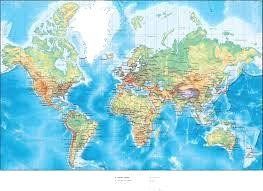
    Ever see a map of the world that looks like this one? Probably not. This is one of the 2D maps that keeps the positions of the continents in correct proportion.

    Unlike the Mercator map (see below) which keeps the longitude and latitude parallels in line & makes Greenland look pretty much like the biggest continent on the face of the planet, whereas the AuthaGraph map is concerned with representing the continents in proper proportion to one another.

    This is a major shift in how we image, or imagine our planet to appear in a 2D format. It requires us to think differently.map 2

    For many of us this amounts to a new way of perceiving. It forces us to consider a new paradigm of the placing of the continents.

    The same kind of paradigm positioning is now thrust upon the Church of Jesus Christ. The Church has known for quite some time that she is no longer a dominant force in the world in a political sense. But she still holds the power of God to change cultures and individual lives. We need to learn a new way of intermingling that is in keeping with the new paradigms of our changing cultural attitudes to our faith.

    We need to position ourselves within a new way of perceiving, and of being perceived, in our rapidly changing world. ALL Christian witness is predicated on the following factors: Scripture, culture, personality, relationships, and the power of God at work in us, individually, and globally. Over the centuries, the Church has grown more organizationally than spiritually: as such, it has become more concerned with quantifiable control than empowered presence. This is an imbalance and must be adjusted.

    But how?!?  Might I suggest that we start by losing our fear and judgmentalism and learn to love our healthy pagan neighbors as themselves— the way Jesus loved people. His love was full of compassion, passion, patience, truth and grace. Should our love be any less than that?

    That’s right, even the way we love people has to change. Paradigm positioning is real.

NEXT— Paradigm Positioning 2…

The Word of the Lord came to…

One of the most repeated phrases in our Scriptures is “The Word of the Lord came to … .” [e.g. – Jeremiah 1:1-19, Ezekiel 1:3, 21:18, ].  It seems that God spoke to many of His prophets and leaders far more directly than He does today. Maybe our generation is just too dense to hear God. Or could it be that we have the Scriptures revealed to us?

     Although, there have been times when even our ancient prophets could not (or would not) hear what the Lord was saying. Numbers 22:21-34 gives us such an example. Look it up. A little embarrassing.

     Does God speak directly to us today? Some say all we need is found in Holy Writ. Nonetheless, there have been times when people have heard God speaking to them directly. What are we to do with that?!? On a personal note, some people, Christians & otherwise, have told me they were directed by God to do a certain thing; and that I was to clarify what it was they were to do. No really, put me on the spot!

     The Word of the Lord, as the Christian Bible, is a revelation to us all. God gave it to us because He knew we could not understand Him by just looking around. Scripture is clarifying God to us. He knew us, as creatures who turned our backs on His grace, and could not see His Truth in the natural world. Thus, His Word is clarified and explained in the stories, poems, actions, and letters of Scripture. Frankly, though, many of us are still clueless as to how He wants us to honor Him and love one another. The word Dense comes to mind. Worse, we read the Bible and toss it aside, writing our own rules for living.

     This is not smart. To the contrary, it is dangerous.

     Nonetheless, there are some Christians to whom God has spoken specifically— Abraham, Moses, Samuel, Paul the Apostle, Constantine, Patrick, Graham, Wimber. Personally, I heard God command me to become a Christian. [It was not a comforting voice.] Then again, to marry my wife…, 48 years ago.

     So the question bounces back to you. Have you heard God speak, individually, to you? It certainly would not be binding upon all Christians; but it would most certainly be binding upon you; as long as it does not contradict anything in Scripture.

     My suggestion? Listen carefully, seek confirmation from Church Elders, clean up your life, and obey.

NEXT— Forgiveness

Honor God, honor people…, make a difference,

Gary

BUT..3- Becoming a man, a woman, who doesn’t need a but

presmedalfreedom“Man is never truly himself except when he is actively creating something.”  ~Dorothy Sayers

     The image for this article is the Presidential Medal of Freedom, awarded to American citizens (and others) who have made a substantial contribution to the shaping and preservation of our American heritage and to the world. Recipients in recent history have been- Walt Disney, Bruce Springsteen, Ellen DeGeneres, Desmond Tutu, Maya Angelou, and Bill Gates.

     None of these men or women said “no” when they were told it couldn’t be done. They just did it. We need to emulate their perspicuity and perseverance. Too many of us give up midstream; or worse, we dream but never start.

     What are the characteristics of people who just do it? Who make no excuses? For one, they stick to it! Take Elon Musk:  he has found so many ways to fail that he has probably lost count; but he keeps at it. On a personal note, I used to say that I had failed so many ways that I had raised failure to an art form. Elon Musk stuck to it; so did I. And so do a lot of you. Keep it up!

     Another characteristic is listening to criticism, especially creative criticism. You know what to do with the negative critics. No you don’t. Actually, listen to them; listen to lots of people. One mouth, two ears…, remember? You want all the creative input and creativity you can get.

     Then there’s regrouping and starting over when you realize you’ve been heading down the wrong line of development. Don’t be ashamed; be smart.

     Psychologists tell us that the key to successful, long term relationships is humility. This is also true of anyone who seeks solutions rather than making excuses. One of our Board members recently designed reorganization for her business that eliminated her division. That’s creative, gutsy, and reeks of humility. She made no buts about it. She just did it.

     She could do it because her character gave her a base for such courage. If we are to become people that have no buts, we must pay dedicated attention to nurturing not only our skills, but our moral character and spiritual selves as well. Never doubt that your life has a spiritual dimension that calls for your attention. It is the basis for everything else you do. From the song in the movie, Saving Sarah CainTURN UP THE MUSIC, “make peace with God and make peace with yourself.” That’s good advice and as good a place to start as any.

     There is so much more to becoming a man, a woman, who doesn’t make excuses, but I will end these contributions with just one more— build bridges, don’t burn them. Too many of us burn our bridges behind us, or in front of us. Christians are especially good at building walls between one another; and the world outside. Christ never intended it to be this way.

NEXT— Butt-Out!

Honor God, honor people…, make a difference,
Gary

It’s not easy being green

kermit     If you’ve been challenged by this call to develop a postChristian Gospel, please know that it has been something I’ve been struggling with for quite some time. Remaining true to the Biblical/historical constructs of our faith, and to the Church, while trying to acclimate our message into yet another cultural context is no easy matter. Wycliffe Bible Translators face this challenge with every new language group they encounter; as did early Western Christian missionaries trying to introduce Western Christian constructs to Eastern and African cultures). Our difficulty is in recognizing that our postChristian era has developed its own culture and language group, based on its basic premise that there are no absolute truths; there is no meta-narrative to explain all of reality; there is no one singular system of belief that can encompass the grand diversity of human experience. At this point, of course, genuine Christians must disagree and still engage with the prevailing points of view.
     It is thus, at this point of division, that we must still follow our Lord into this world’s various cultures, adapting His time-tested message to be understood within the grand diversity of human experiences. This is not a task to be taken on lightly, let alone naively. Our message can neither be too complex to be grasped by the simple, nor can it be so simple that its matrix, woven throughout human history and into both ends of eternity, be lost in “the simple gospel,” with no context outside of the Creation/Fall/Redemption/Fulfillment rubric. That is why we must end our consideration of a postChristian Gospel with a reference to BEING GREEN.
     Being green, surprisingly, refers to more than environmental/ecological responsibility. The framework to which I refer comes from a 1969 musical piece sung by Kermit the Frog, Ring-master of Jim Henderson’s MUPPETS. I encourage you to watch it; go to-http://www.youtube.com/watch?v=hpiIWMWWVco&feature=related to view our hero sing it in his own croaks.] “It’s Not Easy Bein’ Green.” (lyrics by Joe Rapposo)
     In the song, Kermit’s point is this- that he may not like the way he is, blending in, often passed over, ordinary; but this is the way he is and that’s that. He is the color of Spring; he is cool & friendly-like. And though as a frog he is small, he can be big, like an ocean, or important, like a mountain. He is green, and that’s just fine. Engaging the postChristian heart is a lot like being green. We may not be too good at it, we certainly don’t fit into our culture’s predominant mindset, but we have to remain true to who we are, to what we believe, and to be what Christ has designed us to be in the grand scheme of things. We are each called upon and designed to play our part in the daily activities of the Lilly Pond. Some days we just sit around and zap flies with our tongues; other days we may run into those postmodern Bull Frogs that beat up on us and take away our pad, trying to push us out of the operations of the Pond entirely. Nonetheless, God has plopped many of us in the middle of the postChristian Pond and expects us to live up to our responsibilities as a vital part of this society’s nurturing and development. We are here to bring Christ’s peace, forgiveness, and new life to the rest of the Pond. We may not like the taste of fresh fly on our tongue…, but we’d better get used to it if we’re going to make a difference.
     There remains yet one more thing to consider- merely practical suggestions on how to be who you are, within your own personality, family, church, and society, as you endeavor to translate the Christian message into postChristian-speak.
_____________________________________________
Play Time
1.      How do you befriend a person who is in pain and/or angry?

2.      To the best of your recollection, what is the Christian Gospel?
a.       Now find someone who is NOT a Christian and ask them what it is.
b.      Tell them your understanding of the Gospel. Ask for their feedback.
3.      Interview people, Christian and otherwise, about the statement- The only absolute truth is that there are no absolute truths. What did you learn?
4.      Ask people if they have overriding principles that govern their actions. Learn.
5.      How are your overriding principles apparent in your actions?
6.      Given that throughout history the Christian faith has adapted to fit into every people group, culture and era around the world, what do you think of the idea of a postChristian Gospel? Is it opening Pandora’s Box?
7.      To what extent is our message a mind-to-mind transfer of information leading to a decision to follow Christ? To what extent is it a heart-to-heart thing leading to an encounter with Christ that can be explained later?
8.      In what circumstances is a problem-solving model of the gospel more appropriate? In what circumstances is a fulfillment model more appropriate?
9.      How do you discover the presuppositions and assumptions a person holds about life and the Christian interpretation of life?
10.  How simple is the Gospel? How expansive could it be?
11.  How are you doing at being in the world, but not of it?
12.  Where do you have a tough time bein’ green?

NEXT TIME~ AFTERTHOUGHTS: my best ideas come to me in the shower
…mostly green,
Gary

Framing a postChristian Gospel: talk’s cheap…, action’s everything

maxresdefault

It is tantamount to interweave action in the postChristian gospel. The apostle James writes,

 14What good is it, my brothers, if a man claims to have faith but has no deeds? Can such faith save him? 15Suppose a brother or sister is without clothes and daily food. 16If one of you says to him, “Go, I wish you well; keep warm and well fed,” but does nothing about his physical needs, what good is it? 17In the same way, faith by itself, if it is not accompanied by action, is dead.

 18But someone will say, “You have faith; I have deeds.”

Show me your faith without deeds, and I will show you my faith by what I do.

–James 2:14-18

     Given the present-day imbalance between Western wealth, emerging Chinese wealth, and the poverty of Third World countries this writer must insist that our postChristian Gospel, our “good news” include a definitive Christian presence and immersion in the midst of our world’s tough situations. These run the gamut from local poverty and homelessness to national insurrections, global inequities and human indignities. Unless individual Christians and the Body of Christ in the West, in all her various forms (churches, parachurch organizations, missions, social services, home groups, etc.) are willing to take their place alongside of other non-Christian agencies, in concerted, cooperative enterprises to care for our world’s impoverished, ill-treated, and subjugated masses, the “good news” of Christ’s salvation will seem all talk, no action. Nowhere in our Scriptures are we called to withdraw from our world, except for times of fasting and prayer. Instead, we are commanded to be involved in our world as active participants in its daily endeavors. To this end Jesus prayed to the Father on our behalf in John 17—

     15 I do not ask that you take them out of the world, but that you keep them from the evil one. 16 They are not of the world, just as I am not of the world. 17 Sanctify them in the truth; your word is truth. 18 As you sent me into the world, so I have sent them into the world.

     Christ wants us embedded within our communities to reflect who He is to those around us. This is the context for our verbal message— our lives demonstrating the Truth and character about Jesus Christ for living in front of our families, neighbors, and work associates.  Then, we must invest ourselves in national and international efforts to bring justice and financial assistance (homes, wells, grain, cattle, etc.) to those in need; all-the-while, “enfleshing” Christ’s commandments.

     “Is not this the fast that I choose: to lose the bonds of injustice, to undo the thongs of the yoke, to let the oppressed go free, and to break every yoke? Is it not to share your bread with the hungry, and bring the homeless poor into your house; when you see the naked, to cover them, and not to hide yourself from your own kin?”  (Isaiah 58:6-7)

     If our postmodern/postChristian world is ever to grasp the importance of our “good news” its context must be the holy lives of Jesus’ followers lived out in community, both inside and outside the church. Truly, we who claim the Name of Jesus Christ do not have the option to withdraw from this present society, except for prayer, rest, and rejuvenation in His Holy Spirit.

     Not of this world…, absolutely!  But…, definitely in this world.

NEXT TIME~ Framing a postChristian Gospel:  it’s not that easy bein’ green part 7.

Embedded…, & active,

Gary

Dr. Gary Davis