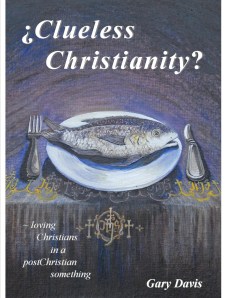
Questionable Contracts

 Dr, Gary, Davis, Needinc, Clueless, Christianity, Christian, Contracts, Questionable, Compromised,             It was a lovely dinner at their favorite restaurant with appetizers, wine, a beautifully presented main course and a special dessert, prearranged with the chef by John. Following a lengthy explanation the nature of commitment proclaiming his deep love for her, and a declaration of intent-to-marry, Sam dropped to one knee, gazed into Susannah’s eyes, and said those four heart throbbing words— Will you marry me?


She, of course, said yes! They were engaged. Over the next few weeks they excitedly told family and friends about their intended path toward matrimony, choose invitations, booked a place for the wedding/reception, and groveled at their parents’ feet for the $50,000 to pay for it all. They had much to discuss. Do I hear $12,000?

One night after watching a movie together, John slipped in the idea of having a prenuptial agreement, to assure their commitment would always last. Susannah was less than enthusiastic.

To be sure, contracts are meant to protect both parties in case something goes wrong with their commitment to each other. In business, that’s wise. In marriage? It seems more like a guarantee of temporary bliss followed by eventual failure.

The sad thing is that too many contracts are designed with loop-holes that can be used to default on the commitment. We think— If things don’t go perfectly (read- the way I want them to), then I’ll just sneak out of this one. Be it in a marriage or a merger, if we don’t get everything we want— we end it.

There are many reasons these escape clauses are slipped into contracts. One of the main reasons is that, over centuries, people have come to learn that they cannot trust one another, in business or in marriage. “I have to protect my own self first.” If people were inherently good this would not be a problem of course; but history shows otherwise.

Thus do we compromise on our commitments. We find those loop-holes that we can slip through and so slip our way out of the spirit of the agreement, though not the letter of the contract. We renege on our commitments in relationships, in business, and in life in general; all to protect ourselves and then the other parties.

What would happen if we put the other person or company first? What if the contract or marriage vow assured blessing and safety for the other first? Could we possibly be hurt or betrayed? Of course. But we would also be on our way to changing this world.

Remaining honorable in commitments rules out subsequent confrontation later.  Win/Win is always the best option.

For what it’s worth,

Gary

Pondering Magic and Mystery

Dr, Gary, Davis, Needinc, Clueless, Christianity, Christian, universe, magic, mystery, deep magic, LewisWhen I was quite young, 12-13, I dabbled in magic. Nothing serious at first, but then it started to draw me in. there are, of course, simple tricks that can be done with slight-of-hand or through hidden mechanical devices. These were simple and fun presentations that astonished my fellow 13 year olds. But the more I got into the sport of magic the deeper I wanted to go.

Toying with the deeper aspects of magic was exciting. Then it grew subtly darker, alluring me and luring me in, to a point where it became increasingly uncomfortable. There came over me a sense of exhilaration at the prospect of manipulating this darker power; until one performance where things got terribly out of control. I had gone too far; I was in too deep and I knew it.

That was probably the first time I had ever prayed in my life. Not one of those Now I lay me down to sleep…, prayers: more like— O my God! What am I doing? Help me! The next day I burned all my tricks equipment and books on magic in our backyard.

Thanks to C.S. Lewis I have later learned of the deep magic, the cosmic dance of the wonder of this Universe and how it holds together. This truly deep magicis the underlying force that draws all matter, energy, and beings under the constant sustaining care of a God-Creator.

            We ignore these mysteries in this present age to our peril. We disregard them as fancy, fables, myths, or archaic religious fairy-tales. But the question remains— Why have they persisted from antiquity into this supposedly postChristian, empirical, “scientific” age? Could it be that there are different kinds of Truths that persist even though they are undiscoverable through our scientific method? Maybe the mystery and magic of old persist because they are real, yet exist in a realm that does not fit our investigations.

            Yet today we insist that science and religion are enemies. Science is about discovering truth: religion is about myth, fanciful postulations for the yet undiscovered. Really!?!

            Do we actually believe that ALL that can be known will be discovered by scientific methodology? Is human ingenuity that stunted? Is human arrogance that portentous? Then we must determine that either our minds are too feeble to make room for the grandeur that is our realm; or, that the wonder of our universe is not that spectacular at all.

            With the myriad of discoveries unveiled seemingly every day I dare say we are in over our heads on either account. Our universe is still full of magic, and certainly full of mystery.

            So help us God!

A fellow journeyman,

Gary

forgedaboutit

Dr, Gary, Davis, CS Lewis, Clueless, Christians, Christianity, Thought, the case for Christianity“Supposing there was no intelligence behind the universe, no creative mind. In that case, nobody designed my brain for the purpose of thinking. It is merely that when the atoms inside my skull happen, for physical or chemical reasons, to arrange themselves in a certain way, this gives me, as a by-product, the sensation I call thought. But, if so, how can I trust my own thinking to be true? It’s like upsetting a milk jug and hoping that the way it splashes itself will give you a map of London. But if I can’t trust my own thinking, of course I can’t trust the arguments leading to Atheism, and therefore have no reason to be an Atheist, or anything else. Unless I believe in God, I cannot believe in thought: so I can never use thought to disbelieve in God.”

—C.S. Lewis

The Case for Christianity, p. 32.

            So…, if you think about it…, well, actually, you can’t. Or at least you cannot trust your thoughts about it. But you can still try to think about it. Sorta…, I guess. Ah, forgedaboutit!

For what it’s worth,

  Gary

Edges

Dr, Gary, Davis, Needinc, Clueless, Christian, Christianity, Edge, Edges, Balance, innovate,Are you on the cutting edge? How do the edges of your life box you in? You need a sharp edge. Don’t go over the edge. Pushing the edge of the envelope. Edgy. The edge of tomorrow. The edge of extinction.

Pick a phrase— edges are at every corner of our lives. Some are boundaries, protecting us from going over the edge. Others leave paper cuts (ouch!). Other edges cut our steaks, or kill our adversaries. Or, metaphorically, draw us to move forward, daring us to test our limitations. Other edges cut dividing lines between families, peoples, countries, and ideologies. In one way or another, we are all on the edge of something.

My personal preference is to be on the cutting edge as much as possible— an innovator, rather than a late adapter. Not that I have to have the latest and greatest; rather, I like to create the future before it gets here. That’s all.

Someone once said to me, “Gary, you never seem happy with the way things are.” I responded, “Why thank you.” He retorted, “No, I meant that as a criticism.” I had taken it as a compliment. Different side of the blade, I guess.

What are your edges? Do they box you in? Cut paths where there are none? Or leave you with paper cuts? Whenever you try to cut through society’s crap, you are bound to get a little scraped up yourself. Is it worth it to you? Is it worth it to make a difference? To be on the next cutting edge? To make a difference?

Maybe you do not need to be an innovator. [Which tends to have a high risk-factor.] But please, don’t drag the rest of us into the “safe,” good-ol’-days of our past. Those edges are dull.

For what it’s worth,

  Gary

Endurance

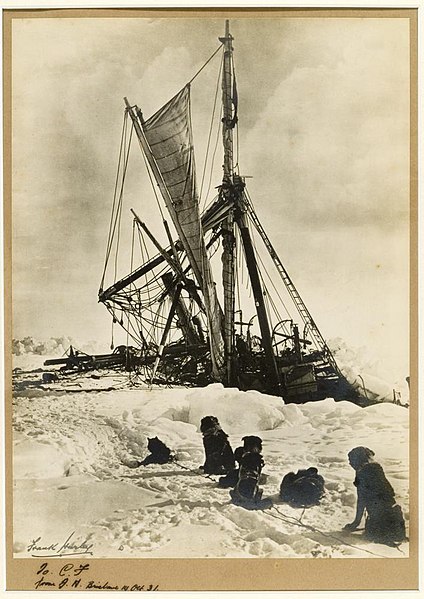
Dr, Gary, Davis, NEEDinc, Clueless, Christianity, Endurance, Ernest, Shackleton, endure, commitmentThe Endurance was the three-masted barquentine in which Sir Ernest Shackleton sailed for the Antarctic on the 1914 Imperial Trans-Antarctic Expedition. She was launched in 1912 from Sandefjord in Norway and was crushed by ice, causing it to sink, three years later in the Weddell Sea off Antarctica.”

[http://en.wikipedia.org/wiki/Endurance_%281912_ship%29]

The miracle is that in the last days of The Endurance being crushed by pack ice, all hands walked away from the ship. Through great hardship Sir Ernest Shackleton (1874-1922) and a small accompaniment made it to safety at the South Georgia Station. Under his leadership and the crew’s perseverance the remaining crew members were rescued from the bitter weather of Elephant Island.

Upon his return to England he was knighted by King Edward VII for his leadership in such extreme circumstances. He had endured conditions so severe that polar historian Stephanie Barczewski described their endurance as “incredible.” [Barczewski, Stephanie (2007). Antarctic Destinies: Scott, Shackleton and the changing face of heroism. London: Hambledon Continuum. ISBN 978-1-84725-192-3.]

One generation later our world was engulfed in World War II. The First World War was supposed to be “the War to end all wars.” Now, of course, we know war to be a part of the corrupted, power hungry nature of all humanity. Yet it was this Second World War that prompted journalist Tom Brokaw (b.1940) to write The Greatest Generation, a book describing the metal, the stamina and perseverance of the men and women who endured such a terrible conflict.

These historic events raise a challenge for all of us—

What are we willing to endure to achieve our goals?

Few of us even raise this question today; settling instead for surviving. If we can get up in the morning and get through another day we consider ourselves successful. Amazing!

What will make our generation great? What will we have to endure to make a difference?

Of the many words that rise to the surface, certainly commitment, sacrifice, stick-to-it-tivness, hard work, focus, and suffering must come to mind.

In one of King David’s Psalms (15:4), there is a descriptor that seems most appropriate—

“… he swears to his own hurt and does not change.”  (NAS)

Commitment and perseverance may just be their own rewards.

For what it’s worth,

  Gary

Differences

Dr, Gary, Davis, Clueless, Christians, Christianity, NEEDinc, cow, differences, different No, really, sometimes it really does feel like this. People are just…, different. Maybe you’ve experienced differences in your marriage, with your teenagers (duh), or with those who say they are related to you. Certainly you’ve felt some people at work were “different.” You thought they were like this, and they turned out to be like that. Or…, something!

We are all different from other people. Sure, we may have the same character traits, financial status, eye color, body types, etc. But people are different; that is what makes our human lives so intriguing. We are never quite exactly the same. Different.

When people are different individually they can be stronger together, as a group. Their differences can bond them to support one another in a team relationship. More can be accomplished the moredifferent people, and their skills, come together to make our world a better place. Differences— joining together. Unless, of course, you believe that people who are different should all stay together in their own little group, sealed off from those who are different from them. Hummm.

Personally, I enjoy people who are different from me. I learn from them. I learn a lot. I do not have all the answers; it is through others who are different from me that I come up with new and differentquestions. And that’s a good thing. It leads to new perspectives, new answers.

That being said, I must admit that I enjoy the comradery of those who think in terms of cross-cultural communication, paradigm shifts, regional colloquialisms, and international blending. So I’m weird. What kind of people do you like to be around? Are they all the same…, or different?

My friends are a little of both. A weird bunch, to be sure. But still, I enjoy them.

So when you are deciding which crowd you want to hang with, don’t pick just one. Join different kinds of groups. Join up with people who are much older than you, and with those who are quite younger than you. In doing so you will learn from the wise, and remember how to play again from those who come after you.

I know I keep going back to the Bible, but it’s my heritage. Christians were first named Christians because no one knew what to call this hodgepodge, diverse, seemingly incompatible group of strangers who loved each other. The name stuck.

There probably isn’t a designation for the kinds of groups I associate with:  maybe wackos.

For what it’s worth,

  Gary


Lake Reflections


relfections on a lake, Dr, Gary, Davis, Clueless, Christianity, Christians, Peace, On Golden Pond, Reflection
Image credit- Picture Images, Gary Davis, photographer

The 1979 play On Golden Pond, written by Ernest Thompson, was a call for us to consider the rifts that develop within families and between generations. Henry Fonda, Jane Fonda, and Katherine Hepburn portray a family whose love for one another has been long lost. Together at the lake it is testy, at best; at other times, combative. Slightly hopeful.


Lakes can be places of renewal or, as in On Golden Pond, seething tension. It’s all up to the people gathered.


Lakes have always brought out my pensive side. My musings run from how to kill those jet-skiers disturbing my peace to the journey of life, brought on by a family of loons sounding their call. I like to think a lot at a lake:  I like to write a lot at a lake, as I am doing now. Lakes draw my soul to the surface and direct my words to wander through the pages of my life.


Some of the pages record surprising “Ah-Ha!” moments; other pages, forlorn endings. In recent days I’ve written new pages within the books and articles I enjoy creating so much; other pages record new chapters of my own journey. It takes time to realize that all chapters do end, only to lay the groundwork for ensuing chapters.


Taking breaks from writing, I enjoy sailing. Sailing on a lake is invigorating! The wind pushes the boat along as it also moves the heart to soar. But today we missed the wind, sitting dead-calm on the surface. Maybe tomorrow. [Although sitting dead-calm, waiting for the wind to move, brings sailors together, uniting them in comradery, birthing new ideas.] Personally, I prefer cutting through the waves at a 60  list. More chance for error—but oh, the exhilaration!


Evenings carry the laughter around a fire-pit, where friend’s burn hamburger and chicken alike; not to mention charred buns and overcooked S’mores as the moon replaces the sun.


Finally, the exhilaration of the day gives way to closing thoughts and the body’s exhaustion. Just a bit more, writing, more pondering…, at least until the mind ceases to function.


It’s good to have friends with lakehouses who offer them to others for rest, refreshment, and rejuvenation. Find one. Then, maybe you’ll find your soul again.  Like I do— every year.


And thank you, dear friends, for lakehouses and so much more.


  Gary


A Generational Thing

Clueless, Christianity, Christian, Book, Dr, Gary, DavisBeing a Christian in a New Era:
 a generational thing.

I just don’t care! I’m not going to church this morning!

            Don’t speak to me in that tone of voice; and you ARE going to church.

            No I’m not! Church is boring. All we do is sing songs that are really out if it and then the same sermon every week—three points, there’s always three points, and then you either change or you’re guilty. I’m just tired of not measuring up week after week. So I’m not going to church. You can’t make me.

            Well, whether you want to or not you ARE going to church and there are two good reasons why you have to go.

            Two good reasons—what are they?

            First, you’re 32 years old and need to go to church. Second, you’re the pastor.


We all joke about this, but underneath we know it’s a real problem. So many people come to church and find it boring, or irrelevant, or strange, or just plain confusing. If it’s your church, whether you are in leadership or attend regularly, you want your worship services to mean something, to make sense, to be relevant, to truly minister to those who come. Our wellbeing and feeling good about ourselves notwithstanding, we need to praise, honor, and encourage the heart of God. But people are somewhat different today than they were ten or twenty years ago. It used to be that if you were seeking the answers to life’s questions you would go to your church, schedule an appointment with the minister, or seek reading material to help you sort it through. Nowadays the BIG questions just don’t seem as important to people. Life has grown so complex; even Christians find it difficult to make consistent commitments to church services or programs. Then there’s this generational thing. Blended worship services, youth councils, and contemporary Christian music, always the music, seems to overshadow everything else. You start with a call to worship, worship songs, maybe a hymn from the hymnal (You remember hymnals—  they came before song sheets, overhead projectors, and PowerPoint presentations). It’s as if the sermon has become secondary to the music! And we still can’t keep our young people. What’s going on?

The fact of the matter is that you’re right— people are different now. Young people find it difficult to relate to the church’s way of doing things. When family structures and society were more stable people did come to church to find answers, to find community, to worship God in a traditional manner. But the breakdown of our society, the dissolution of so many marriages, hippies, Vietnam, Columbine, 9/11, the financial collapse, and two wars have all contributed to the fragmentation and isolation of the generations.  This fragmentation has had a greater impact than we could have imagined.  We set our senior citizens aside to die so we can get on with our lives; this alone constitutes a major fracture in our family cohesion. And thanks to the Baby-Boom of 1946-1964, YOUTH CULTURE does, in fact, dominate our world.

In the summer of ’01 my wife and daughter went on a humanitarian mission to Belarus, a former Soviet “satellite nation.” They were assigned to a summer camp that had formerly been a prison. Living conditions were sparse; meals, no matter what the main course, offered “pasha,” a granular, crunchy, Elmer’s glue-like substance (so reported our daughter). As a fourth world country[i], they were a beleaguered nation—but at night they still danced to the music of the U.S. pop-star Brittany Spears at the discos. And, oh yes, and there was never a shortage of vodka.  Never.  In a country where physicians earned $300 a month, their children moved to the music of the West. If you look you will find the same thing happening around the world from Hong Kong to central China, from Australia to Myanmar.  The music of the West, translated or not, permeates the culture. And the youth live by it. Youth culture has become a culture unto itself, nurtured and fed by older generations who want to grab some of their estimated disposable annual pocket change of close to $153 billion in the US alone. [ii]

So when young people ages 14-25 come to church what do they find, generally?[iii] They find a shape of Christianity virtually irrelevant to their virtual realities. They find a pyramid power structure contrary to their relationally oriented internet networking. [FaceBook, a social networking website, founded by Mark Zukerberg and his college roommates at Harvard in 2004, now has more than 550 million subscribers.] They find, for the most part, the music to be somewhat archaic. One example is the SONIC PRAISE CD (by Sonic Flood) in which the worship leader tries to convince his audience that even “oldies” can have meaning if they are updated musically. I was expecting Amazing Grace or a 1950s youth hymnal chorus spiffed up a bit. The reference was to Shine Jesus, Shine, circa 1982. Ancient history.

But has it ever been different? Well, yes and no. Youth have always found fault with the status quo. They have always wanted to move ahead a little faster than their more conservative seniors. And their parents, grandparents, teachers, and seniors in general, have always criticized their music and style of dress. If anything, with the acceleration in the rate of information exchange and the ease of international communication (Def.- Teenager = mobile phone + texting + ear), teens & twenties not only have easier access to each other, but they can connect so much faster and in so many more ways (cell-phone, texting, Skype, Facebook, etc.) than a few years ago. This, plus their ability to be “early adapters” enables them to become more insular than any generation before them. When our daughter was in high school I joined her to watch an MTV show called Real World. The scenario is a gathering together of 5-8 select teens/twenty-somethings who live together, live on camera, 24/7.[iv] The show presents life as they experience it, with all its romantic developments, breakups and heartaches. As Bethany and I watched Real World it finally hit me like a jolt— if this show was about anything it was not the real world!  It’s a world with no adults, no societal guidelines, no children running, and little personal responsibility beyond remembering to get dressed when you get out of bed in the afternoon and to brush your teeth in case you meet someone. But from this experience I learned something: there is no such thing as “western culture”; rather, there are “western cultures.” The West, has in reality, multi-cultures, defined by generational differences in a big way, by geographic region, by the urban-suburban-rural context, and, of course, by economics.

Continue reading at Amazon

[i] First World- Europe/China. Second World- the Americas, Australia. Third World- Africa, Latin America. Fourth World- recovering/emerging former Soviet nations.

[ii] Teens themselves spent $105 billion and influenced their parents to spend, on them, an additional $48 billion, for a total of $153 billion annually. “Report of Teen Research Unlimited Study,” Discount Store News, January 3, 2000. Statistic for fiscal year 1999.

[iii] I am well aware that to employ the phrase “churches generally,” is impossible. What is at stake here is the general reaction of unchurched youth to traditional Christian worship, whether or not they employ more contemporary worship music.

[iv] MTV also offers a similar show called Road Rules. The difference being a travel ingredient.

The Time Machine


Dr, Gary, Davis, Clueless, Christianity, NEEDinc, time machine, H G wells, future, journeyWhere would you go? This poster poses a whimsical question. It was released to advertise the 2002 movie version of H.G. Wells classic work The Time Machine (1895); oddly, directed by one Simon Wells. So, really, if you could travel through time, where would you go? In my 30s I had to make that decision. It was fascinating.


In my personal travels through time I can tell you that I have never seen such beautiful creatures as the ones pictured on this poster, or in the movie. That being said, I have seen the Big Bang. It was slower and bigger than most scientific postulations have it. I have seen the dividing of the land masses of Pangea as they separated from our oceans. I was present in the Garden of Eden; beautiful place, sad experience. And yes, it did all start with two people. What a surprise!


And I have seen the future. Aspects of it are incredible: other parts, not so much. For security reasons I cannot reveal too much of what I saw in my travels, but I can tell you some things.


For one “wars and rumors of wars” continue throughout the future. I found this to be disheartening. Nukes are never used again, except in small detonations; but the atrocities people inflict on one another increase in brutality and scope. Technology dominates and connects everyone. It truly is amazing. [I finally get my global computer implant!] And we actually come together under one global government; not without great compromise on all sides. America’s moral decline into an amoral pluralism is the final tipping point that couples with a compromised, secular Islam and a despairingly anemic Christianity. All becomes one. Some still hold true to their faiths:  but few.


But the question at the top of the poster still foists upon us a challenge—


Where would you go?


Some diehard Christians would go to see the birth or resurrection of Jesus. Muslims would travel back to witness Mohammed receiving the Q’ran. Asians might journey back to witness the building of The Great Wall of China (they would be gone a long time). Geologists might want to see the formation of the earth’s core and the initial drifts of earth’s tectonic plates. Astronomers would want to view the formation of our universe. (What is “dark matter” anyway?) Historians, well, they would travel everywhere and anywhere. I might want to visit with members of my ancestral-tree. From what little I do know they were a crafty bunch.


All of us would want to go somewhere. We’d want to correct the ills of the present in the ancient past. Do you think that our presence would help things? Or would we screw up? We would want to prepare for the future. Could we? “There is a time for every season under the sun… .”


Things that make you go “Hummmm?”


  Gary


Control Issues

Clueless, Christianity, Christian, Book, Dr, Gary, DavisControl Issues— re-basing the basics. This may sound funny, but I’ve often wondered if this propensity to want things nailed down theologically (beliefs), and the commiserate fear of emotion wasmore a reflection of many men’sdesires to preserve control over life’s myriad situations. Not control, in an exclusively bad sense, but control for its own sake, for some men’s personal sense of safety and identity. Often, as I enter into conversation with a pastor or someone I have just met, I find myself in a kind of out-of-body experience where I look down on the conversation from above and try to find the answer to a question— “Where does this person feel safe?” If you really want to get to know a person, try to discern where they feel safe. If you examine the last 400 or so years of Western Christendom you will find that there was an intense desire to nail down as much as possible theologically. Some nailing was definitely needed as the Church had become almost indistinguishable from the world around it. But after 400 years, the nailing seems to have become an obsession. The Roman Catholic Church is the one true church; the Church of Christ is the one true church, the Jehovah’s Witnesses are the one true church, the Mormons are the one true church. Why is it we have this drive to claim that we alone are right? Calvinism is the only complete theological construct: Dispensational theology has the corner on the End-times and the expanse of human history. Why is it that we have come to believe that our theological construct, our theological position on baptism, the Second Coming, or church government must be the most right one!? Could it be that these are issues of control? It may well be more than that; maybe it’s control for the sake of a personal, positional sense of safety. Most of us do have a keen sense of self-preservation built into us. When it comes to the church, maybe it is some men’s need for personal/positional safety that underlies the need to be in command. Controlling belief, which is quantifiable, and thus measurable, is easier to manage than human emotion. But fear of emotion because it is an unreliable reflector of an inner reality is as crazy as believing that making a statement about one’s beliefs is more reliable. In reality, it is the combination of our heart and mind that explicate this Christian condition within an individual. But there is one ingredient more— action.

When I was in the midst of my teens I remember my mother saying to me “What you do speaks so loudly I can’t hear what you are saying.” I know she was probably quoting her mother, but her point was obvious. In the office where I work we have all kinds of little witticisms that remind us of what we are trying to accomplish. One of these quips is— Talk’s cheap: action’s everything. In many churches I find that is exactly what we do … we talk a lot. Remember THE DECADE OF EVANGELISM? 1990-2000. Of course you don’t. Why? What happened in 1990? We discussed whether the last decade of the century really began in 1990 or 1991. And what happened in 1991? 1992? 1993?  Very little. The Decade of Evangelism just faded away. All talk, not much action.

To this writer there seems to be a tremendous emphasis in the church on understanding what you need to believe and very little emphasis on DOING anything with it. This is an imbalance; but it is not the kind of non-balanced faith I am talking about. If anything, Christians are a long way down the road in clarifying, refining, honing, and re-clarifying what it is we believe.  It just has not seemed to translate into very much action. Especially any that has any positive influence on the lives of those around us— those who are unaware that we are followers of Christ, those who have never seen a Bible (let alone opened one), and never darkened the door of a church. It’s time we revisited Jesus and read the stories about how He lived, where He spent His time, and how He related to those with whom He came into contact. Consider Jesus in two situations—  one where He is teaching, and another as He faces one of life’s typical conundrums— the conflict between completing a task…, and being side-tracked along the way. First, an example of Jesus’ teaching.

 1 And seeing the multitudes, He went up on a mountain, and when He was seated His disciples came to Him. 2Then He opened His mouth and taught them, saying:

3“Blessed are the poor in spirit, for theirs is the kingdom of heaven.

 4Blessed are those who mourn, for they shall be comforted.

 5Blessed are the meek, for they shall inherit the earth.

 6Blessed are those who hunger and thirst for righteousness, for they shall be filled.

 7Blessed are the merciful, for they shall obtain mercy.

 8Blessed are the pure in heart, for they shall see God.

 9Blessed are the peacemakers, for they shall be called sons of God.

10Blessed are those who are persecuted for righteousness’ sake, for theirs is the kingdom of heaven.

11“Blessed are you when they revile and persecute you, and say all kinds of evil against you falsely for My sake. 12 Rejoice and be exceedingly glad, for great is your reward in heaven, for so they persecuted the prophets who were before you.

13 “You are the salt of the earth; but if the salt loses its flavor, how shall it be seasoned? It is then good for nothing but to be thrown out and trampled underfoot by men. 14“You are the light of the world. A city that is set on a hill cannot be hidden. 15Nor do they light a lamp and put it under a basket, but on a lampstand, and it gives light to all who are in the house. 16Let your light so shine before men, that they may see your good works and glorify your Father in heaven.

~ Matthew 5: 1-16

Look at the setting in this passage of Scripture. It is outside, on top of a mountain, or at least on its slopes. It was probably warm, scenic, serene. Now look at Jesus’ style. It was not a “lecture hall.” Jesus was not debating or setting forth an argument. He was with those who trusted Him and would listen to what He had to say. And what did He do? He spoke to them where they were in life— poor in spirit, sorrowful, timid about life, hungry for God, in need of mercy, and so on. He was addressing the weak and painting a picture for them of what it would be like to make a difference in the lives of their friends and in their society. He gave them hope, He gave them a challenge to be the light of the world. To be bold—  to shine!

The next scene is quite different. Jesus had just crossed a lake when He was approached by Jairus, a trusted leader of the people. It went like this—

21 Now when Jesus had crossed over again by boat to the other side, a great multitude gathered to Him; and He was by the sea. 22And behold, one of the rulers of the synagogue came, Jairus by name. And when he saw Him, he fell at His feet 23and begged Him earnestly, saying, “My little daughter lies at the point of death. Come and lay Your hands on her, that she may be healed, and she will live.” 24So Jesus went with him, and a great multitude followed Him and thronged Him.

25Now a certain woman had a flow of blood for twelve years, 26and had suffered many things from many physicians. She had spent all that she had and was no better, but rather grew worse. 27When she heard about Jesus, she came behind Him in the crowd and touched His garment. 28For she said, “If only I may touch His clothes, I shall be made well.”

29Immediately the fountain of her blood was dried up, and she felt in her body that she was healed of the affliction. 30And Jesus, immediately knowing in Himself that power had gone out of Him, turned around in the crowd and said, “Who touched My clothes?”

31But His disciples said to Him, “You see the multitude thronging You, and You say, “Who touched Me?”‘

32And He looked around to see her who had done this thing. 33But the woman, fearing and trembling, knowing what had happened to her, came and fell down before Him and told Him the whole truth. 34And He said to her, “Daughter, your faith has made you well. Go in peace, and be healed of your affliction.”

35While He was still speaking, some came from the ruler of the synagogue’s house who said, “Your daughter is dead. Why trouble the Teacher any further?”

36As soon as Jesus heard the word that was spoken, He said to the ruler of the synagogue, “Do not be afraid; only believe.” 37And He permitted no one to follow Him except Peter, James, and John the brother of James. 38Then He came to the house of the ruler of the synagogue, and saw a tumult and those who wept and wailed loudly. 39When He came in, He said to them, “Why make this commotion and weep? The child is not dead, but sleeping.”

40And they ridiculed Him. But when He had put them all outside, He took the father and the mother of the child, and those who were with Him, and entered where the child was lying. 41Then He took the child by the hand, and said to her, “Talitha, cumi,” which is translated, “Little girl, I say to you, arise.” 42Immediately the girl arose and walked, for she was twelve years of age. And they were overcome with great amazement. 43But He commanded them strictly that no one should know it, and said that something should be given her to eat.

~ Mark 5:21-43.

Jesus had set his course toward the house of Jairus. Yet this ostensible interruption by an insignificant woman gives us more to consider than the simple completion of a task.  [I’ve often wondered…, was this planned? Hummm.]

I’ll not attempt extensive analysis of these passages, but taken together, they bring to light two seeming extremes in Jesus’ way of communicating. The Matthew passage contains the opening lines of Jesus’ SERMON ON THE MOUNT. In this passage Jesus is teaching. He is reviewing some of the life-principles that God has designed to give people hope when things no longer make sense. Remember, Judea was suffering under Roman occupation during the time of Jesus’ life. There were many Jews who were imprisoned and executed, so the cultural mood was somber, frustrating, fraught with anger and despair.  Jesus’ message offered hope of the most compassionate kind. At the end of the Matthew section, Jesus uses three images to remind His followers what they should be like— the salt of the earth, a light on a lamp-stand, and a city built on a hill. If you would allow me a digression …, those who are genuine followers of Jesus Christ are to be salt to preserve life and add flavor to it; we are to be light, to clarify the way to God; and we are to be like a city built on a hill that cannot be hidden, so as to provide a haven for hope and a goal to be reached.  How did Jesus envision that others would see these things in us? Through the sense of safety and stability that grows in us when we accept what God offers us—

  • Are you poor in spirit, discouraged—you will come alive in heaven.
  • Do you mourn at the loss of loved ones—you will know God’s comfort.
  • Are you timid, afraid—the earth is yours.
  • Do you hunger for righteousness within—it is yours!
  • If you’ve shown mercy—it will be granted to you as well.
  • Are you pure in heart—seeing God is your great gift.
  • Do you bring peace between warring peoples—you will be seen as my sons, says the Lord.
  • Are you being persecuted for Christ’s sake—great is your reward.

Do these words bring you hope, today, as you read them? Then you can understand some of what Jesus’ first followers felt as they heard them. There was hope. His teaching made sense, even though it meant being merciful to those who had raped your daughter or executed your father. How else are people going to see that followers of Christ are different other than through our lives and in the ways we wrestle with life’s common hardships?