Hidden

051048048057054055054050124053048048124052048048Why are we hiding? Or— What is it we try to hide? Too many of us exert a lot of energy trying to hide, or trying to hide something about ourselves that, if revealed, would expose us.

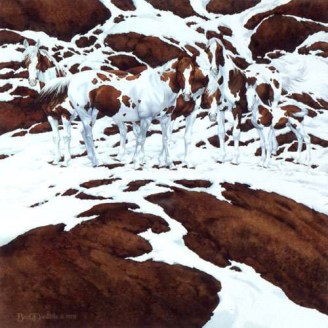
The artistry of Bev Doolitle (1947-   ) depicts objects hidden to the casual observer. We are so much like the horses in her paintings. If people were to look intently at our life, what is it we would try to hide? I’ve worked with some people whose biggest fear in getting married was being known. I tried to assure them that being known, and still loved, was the best part of being married; I’m not sure they bought it.

What drives us to hide things? Insecurity, fear, shame, dishonesty? Or worse, why do we hide ourselves? Of course, if you’ve been betrayed or used, there is some warrant for it. You don’t want to be hurt that deeply again.

The issue, basically, is one of safety. We ALL want to feel safe. So we hide the parts of us that would expose us. This is wise…, to a point. But our need for safety can also choke the spirit within us. It can bind us in a box with just slits through which we take in the outside world.

Would you like to escape your box and take in more of the outside world? Here are some ideas—

  • Spend time with people. Reflecting off of them will give you insights into yourself. You’ll surprise them; they’ll surprise you.
  • Try something that engages your soul. Doesn’t matter what. Just not too much over the line. Deeper discussion, life challenging experiences. Hold back on sky-diving.
  • Build one-safe-friendship. Create a confident.
  • Create a private novel about the kind of life you’d like to live. Then, slowly, start to live it.

Hiding takes a lot of energy. Think what you might be accomplishing if you didn’t have to work so hard at hiding your true self. Think of the energy you could invest in developing new dreams, new skills or new relationships. Be intentional. Remaining hidden, if pursued over a long period of time, results in further isolation; and that creates further fear of being known.

You do not need to stay hidden. Make the decision to be known.

For what it’s worth,

Gary

Vulnerable

dr, Gary, Davis, Vulnerable, Seth Godin, Clueless, Christians,

In 2012, corporate guru Seth Godin released a “children’s” book
titled V is for Vulnerable: life outside the Comfort Zone. In it, Seth runs through the letters of the alphabet along with some vulnerable captionof the significant ideas they represent— integrity, trust, and productivity in the workplace. It truly is a marvelous picture-book, appropriate for any business exec at any level in the grinding wheel. ‘Nough said.

But what about vulnerability? Why would this great guru of leadership pick this letter as the title for his book? Vulnerability is the critical attribute most wannabe leaders side-step to avoid exposing too much of themselves to curious eyes.

VULNERABILITY is about being open & honest with people. Granted, there is a difference between openness and honesty. We are always called to be honest in our personal and professional relationships. But openness depends upon the degree of trust between people, between companies, within families, or between nations.

It’s about safety. Am I safe with this person? To what degree can I trust this multinational treaty? What are my hesitations in this relationship? This is where mutual vulnerabilitybecomes a critical factor. Am I safe in revealing more of myself to this person? In thisbusiness contract? In this national concordat?

It is those subtle nuances that give us pause in our exposure. This is where a confidante or counselor could play a vital backdrop role in reaching a mutually safe agreement on how things should proceed. It always helps to see things though another’s eyes. This lowers the risk level a tad; but, as always, someone has to make the final decision, set the course of action, and seal the pact with an honest handshake. And a signature— YOURS.

Without question, if this person is you, make the decision within the wisdom and insights offered by others. But, make the decision. This will employ your sense of safety, your gut intuition, and your “read” of every party in the negotiations. It will include your willingness to be vulnerable with those across the table; it will involve their willingness to be mutually vulnerable with you.

Our ability to be vulnerable with people is in direct correlation with our ability to love and/or trust another person or group. If you cannot be vulnerable, you also probably have difficulties with trusting and loving. Doing business, resolving conflicts (especially in marriage), or creating the future are all issues of trust, safety, and vulnerability— on both sides.

So, work at being more vulnerable, more approachable. Sure, you’ll get burned sometimes; but that’s no reason to throw out the gains reaped from being vulnerable.

For what it’s worth,

  Gary

Depression

Robin Williams, Danger, Depression, Suicide, despair, needinc, dr, gary, davis             Depression is a silent killer. You don’t even have to die to experience its death. You live the death just under your skin, suffocating your soul, 24/7. It is an insidious infection that never lets up.

Sure, you have moments of elation, rest, momentary peacefulness, or escape. I’ve struggled with it for years. When I first married, my new bride would describe me as morbidly introspective. Nice.

Yet on the surface I was upbeat, forward looking, powerful, and optimistic. Underneath, I always wondered if I measured up to peoples’ expectations. I was sure I didn’t.

So I performed better. And better. And… tried harder and harder… .

Robin Williams recent suicide brought it all back to me—the acting, the humor, the insecurity-amidst-confidence; and especially the fear of being known. I even wrote an article on it.

What drives such a successful man to draw an end to his life? In a word— despair. Def.- The conclusion that life holds no more for you. That managing life is now beyond your ability and/or desire. During my journey as a counselor three individuals have committed suicide under my care; one, premeditated, the other two, on the spur of the moment. I’ve always wondered if I could have prevented these needless deaths. My depression spiraled downward to the deepest depths.

If you could have walked through Robin Williams’ depression with him, what would you have said? What hope would you have offered? What reason to continue living? What great purpose would have fulfilled his life? Certainly his success as an actor and comedian did not bring him the fulfillment he so desperately hungered for.

Many fellow Christians might have offered him the reasons he sought in a relationship with Jesus Christ. But do you realize how strange that could have sounded to someone who had no hope, who sat outside the perimeters of God’s protection? It would have sounded farcical.

So many of us, Christians and normal people alike, place our hope in our personal security, our financial stability, and in our own abilities and self-confidence. I don’t think this is enough.

There is a great deal to be said for reestablishing a relationship with the God who made us. And for cleaning out the garbage of our lives. And for clearing the air with our friends.

I grieve Robin Williams death. He left us, unnecessarily, too soon.


For what it’s worth,

  Gary

Building Blocks

Dr, Gary, Davis, Christian, Clueless, Christianity, Building, Blocks, Build up, Most of us know the things that wear us down, that tear us down. Chronic car problems, an over-demanding boss, tension at home, “teenagers.” But what about the things that build us up? Being content one evening will not strengthen you for long:  turning in for the night with a sense of accomplishment, night after night, will do more for you than almost anything else imaginable.

So allow me to offer a list of some of the things that have, and still do, build me up-

1.      Accomplishment.

2.      Healthy relationships.

3.      Restoring broken relationships.

4.      One good, yea verily, great, friendship.

5.      Being loved.

6.      Loving someone.

7.      Sharing your pain with someone else.

8.      Crying.

9.      Resolving issues.

10.  Giving to others.

11.  Self-care.

12.  Admitting, and facing, your guilt and failures.

13.  Identifying and defining tightly that which fulfills your passion.

14.  A sense of purpose

15.  Time alone.

16.  Forming an open, transparent relationship with the God who made you.

17.  Times in deeper realities through prayer and imagination.

18.  Difficult situations.

19.  Difficult people.

20.  Working hard.

There are probably many more things that build me up, but one in particular I MUST mention or go unwisely amiss of any advice I might offer. Spending time, both quality & quantity, with my wife Starr Lynn Davis.

For what it’s worth,

  Gary

Insufficient Evidence

Dr, Gary, Davis, Needinc, Clueless, Christianity, Christian, beliefs, evidence, values, known, Let’s start by considering the opposite of insufficient evidence—namely, sufficient evidence. The question put to us is simple, “Would there be sufficient evidence to convict you of what you say you believe?” or, “What repercussions do your values have for the way you live?”

Certainly, Navy Seals can boast ample evidence that their actions bespeak of a deep belief in “God & country.”  (Their motto is Ready to lead…, ready to follow. Never quit.) People of deep religious faith generally could be convicted for their faith; there should be sufficient evidence. (If there is not…, well.) There is probably a Gallup survey that asks “To what extent do you follow through on your commitments?”

Yet in our Western, postChristian, pluralistic world there seems to be more of an inclination toward tentative commitments and cautious relationships. The fear of being known has regained unusual ground in a culture longing for safety. There has also been a rise in the fear of being wrong, or making the wrong choice or decision. Therefore, many of us never fully commit to anything. We have prenuptial agreements, escape clauses, termination parachutes, etc. We are a people who do not like to be pinned down or labeled; Christian, Republican, Conservative/Liberal, even male/female.

Part of the reason for our hesitation-to-commit is our fear of being hurt. It is our fear of being rejected from “the group,” or our insecurity stemming from our own historical observations that commitments are simply inconsequential. So why make them? We have fed this innate fear that, if we make a mistake we need to cover ourselves; we need to provide an escape route that will free us from the whole mess, the marriage, the contract, the bond. We fear being hurt so much that we don’t fully give ourselves to anything, or anyone, anymore. We always need to protect ourselves— a way OUT.

Therefore, we can never be pinned down on what we hold dear, what we value, or what we believe:  it’s just safer for us that way. Or is it?

Without sufficient evidence to hold us to any belief system or set of values we may have escaped the wrath of some other group. We may have avoided another deep heartache. But we have also demolished our own core. We have morphed its solidity for mush, its certainty for wishy-washy equivocation, which is about as inspiring as tan wallpaper.

If our leaders, and ourselves, do not hold positional beliefs and values strong and clear enough to convict us then who have we become? Insufficient evidenceis the descriptor of weaker men who do not want to be held accountable for their actions.

Let’s stand up and be counted—  even if it costs us our lives.

‘Nough said,

  Gary

the wolf that is clawing at your door

Dr, Gary, Davis, Clueless, Christian, Christianity, Wolf, wolves, fear, door, Sometimes…, when we are alone at night, we can hear things— creaking floors, expanding pipes, hissing radiators, or dripping facets, that oft become more than they actually are. Our senses play tricks on us. We imagine someone trying to break in, someone coming up the stairs, or something in the room. Our fear crescendos until we reach to turn on the light. We breathe a sigh of relief; nothing there:  but what about outside the door? We pull the covers up.

Nonetheless, could it be that something is genuinely there? Not in the creaks and cracks of the walls that surround us, but just outside the doors of our minds, of our souls. We cannot see it. We sense it. We feel it. We know something is “out there,” that wants us. We’re just not sure what.

Its clawing is relentless, constant. We can never quite evade the feeling that we are under surveillance, under assault.

As we move through our days, going about our business, getting things done, the scratching feels more subdued, less present, less a threat. It is when we are once again alone with ourselves that it returns— the wolf that is clawing at your door.

At times we toy with the clawing, imagining it to be an offer to open the door; an invitation to come and play with the beast, to see how close we can come to his claws, how close we can come to his jaws. We make a game of it, scratching back from the safety of our side of the door, 2½” away from certain flesh-shredding destruction. We find it exciting to play with evil so close to its fangs.

It is one thing to fall into danger, into the clutches of the wolf. It is quite another to play with it, as if it were a cuddly little puppy. He is not. For given the opportunity, the wolf would devour you and everything you hold dear. Yes, his games are exciting, tempting you to play outside in the dark; but in the end he would consume your flesh and crush your heart and soul in his jaws.

Life is full of vibrancy and celebration! Joy! But life is no game; though to avoid its uncertainties and difficulties we often pretend that it is. Wisdom dictates that we bear responsibility for our lives, our actions, and those within our safe-keeping. To do any less is to crack the door open for the wolf.  He would love to get his claws into you. Be on your guard. Always.

With caution,

Gary

terrified

Dr, Gary, Davis, Needinc, Clueless, Christianity, Christian, fear, terrified, suicide, life, insecure,Far too many people around our planet survive their days in petrifying terror. Whether due to the horrors of war, abusive families, or constant failures, they have become a class of human beings who dread life. Their intense fear fossilizes them into a dormant state of seclusion from life’s activities, people, and society. Eventually, they lose any accurate connection with true-realityand cocoon themselves within their ever shrinking world. For some, it is just too much to bear and they execute the ultimate separation from their fear. They end their life.

Terrorized people are oft categorized as recluses, hermits, most fourteen year olds, monks, ascetics, and those with paranoia and/or phobias. We think of these people as mentally ill; and some probably are. They range from insecure youths to the executive offices of corporate and governmental leaders: they are among the under-dogs and the privileged. The common fear they possess knows no rank or race. It is a soundless terror eating away at their soul.

Edvard Munch’s 1893 painting The Scream, depicts his own horror in a moment of realization that death awaits us all. He too lived a life of constant terror, bordering incessantly on insanity. Even though his works have received international acclaim as some of the finest examples of Expressionist Art, Munch ultimately isolated himself from the world outside in his estate at Ekely (Skøyen, Oslo) where he died at age 80. Throughout his life he remained deeply obsessed with morbid pietism and psychoneurosis. “The angels of fear, sorrow, and death stood by my side since the day I was born.” [Prideaux, Sue (2005), Edvard Munch: Behind the Scream, New Haven: Yale University Press, p.2.]

It is often impossible to overcome such a deeply rooted sense of dread. Nonetheless, there are many who have overcome being terrified of life and reentered the land of the living. How?

  1. Some have gotten angry. Tired of this life-sucking way of living they finally got mad enough to fight back. They fought themselves; a fight never easy of enjoyable to wage. Until you win. (Note- they often had to fight other peoples’ perceptions of them as well.)
  2. Many have admitted their inability to beat this agony alone and sought the support of others. No man is an island. Seeking another’s support takes an active decision to trust. Trust is indispensable in defeating terror. It is a risk that must be taken.
  3. They did not give up after every falter or failure. THEY DID NOT GIVE UP. But they really wanted to.
  4. Many have turned to God in prayer. Whether you view prayer as truly talking to the God of the universe or not, prayer seems to elicit some form of cleansing, healing, and peace. Personally, I actually talk to Someone. What bothers me is when God talks back.
  5. They rejoiced as pieces of pain were lifted from their souls. Small victories.
  6. Some, whom I have counseled, also danced and sang. This self-therapy surprised me. In some way it freed their spirits to soar above the terror and gave them new perspectives on it.

Living a continuously terrified life is not a life. It is an inner death sentence being carried out long before actual death. May God grant you His power to speed you on your journey to new life!

Have a nice week,

Gary

safe house

Dr, Gary, Davis, Needinc, Clueless, Christianity, Christian, Most of us have a deep-seated need for a safe person, a safe activity, and a safe place. I have very few safe-people in my life; that’s something with which I struggle constantly. [Albeit, I am a safe-person for many.] I have a number of safe-activities— hiking in the Tetons, photography, counseling, test driving a Jaguar c-x75 or a Bugatti Veyron; definitely not cooking. And I am honoured to hold a number of safe-places— a Lakehouse in NH, the Harraseeket Inn in Maine, Jenny Lake, and, once again, our home. Hopefully, you can name a few safety-zones in your life as well. For our concern here is just that— Safe Houses.

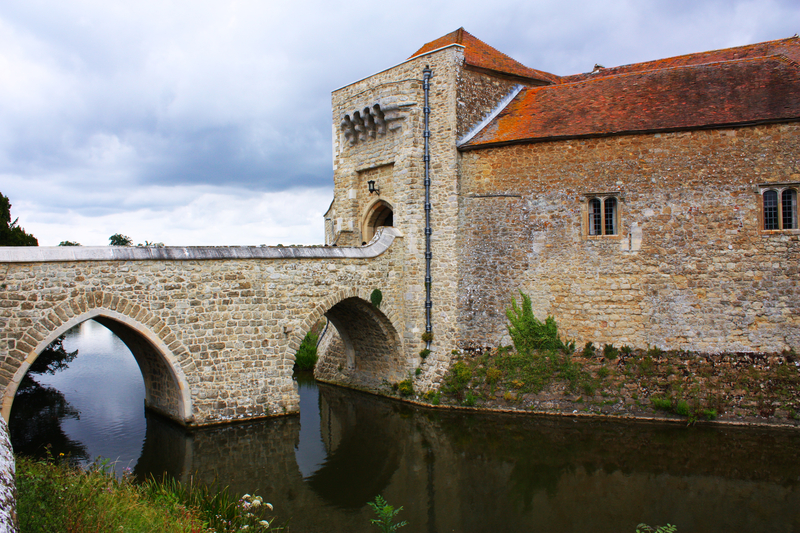
Rivendell, an elven dwelling depicted in J.R.R. Tolkien’s The Lord of the Rings trilogy, is described in one passage as “a safe place surrounded by evil.”  The visual images of Rivendell, both in Tolkien’s book and the subsequent movie, draw in the reader’s imaginations to be in such a place; to walk its vaulted porticos, to gaze out into the rich, deep forests and roiling waters as they surge over falls and crash on the rocks below. Rivendell’s elegant tapestries, portraying triumphs of the past, her flowing sheer curtain-walls, and comfortable beds all capture the traveler and bid him/her “Welcome! Within these walls and rooms and spires are you ever safe!” I’m ready for such a place. Are you?

All things being equal, we both still dwell in a place surrounded by evil. I wonder? Could it be our task to provide a safe house for other weary, down-trodden travelers? Genuine hospitality is a rare commodity in our society— unless it is paid for. Our lives are so FULL of, well, everything, that the last thing we want is company. Our homes have become our fortresses; our families, our havens (unless you have teenagers). Entertaining is simply too much effort. Considering the plight of our society, the economy, investments, extensive and disastrous marital relationships, and our own financial futures, has there ever been a better time to provide a safe house in a land of evil? Yes, we will have to sacrifice. That’s what giving graciously is all about.

It doesn’t have to be limited to the home either. A safe house can easily take root in our workplaces just as well. Bringing in a special desert regularly, encouraging co-workers practically, not merely with words, taking a workmate to lunch, providing refreshments for a critical meeting, or, just listening around the water cooler, all or any can become a foundation for a safe house. Then there’s your office. Do people gain a sense of safety when they enter it? Do you feel safe within your office? For many of us, turning our offices into safe houses is a distinct possibility. We just need to think about it more, and then initiate the change.

I’ve often wondered why Jesus said, “In my Father’s house are many mansions; I go there now to prepare a place for you.” Is our role is to provide safe mansions for people here, so they’ll get used to the idea of being safe with their Creator later? We are neither called nor designed to escape this world. So we might as well get on with the task of providing people with those safe places we all need in times of turmoil and uncertainty.


Have a nice week,

Gary

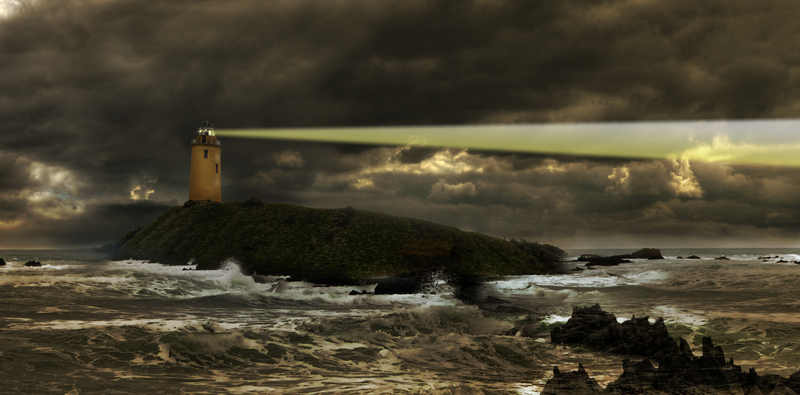
It was a dark & stormy night…

Dr, Gary, Davis, Needinc, Clueless, Christianity, Christian, It was a dark & stormy night…

It was a dark & stormy night… .” So the mystery begins, drawing us into its furtive intrigue. For some of us reading such a mystery is an escape, an alternate realm wherein we leave our realities behind. For others, their lives are already dark & stormy; there is no solace in such an escape. Or so it seems. They need the exhaustion that extreme sports or exercise drains from their body. Still others carry their darkness & storms within, never finding relief or rest. Their souls are devoured in  secret isolation.

There is an evil that lurks on the edges of all of our lives. For some, it creeps inside barely noticed; one day we awake to find it has taken over every aspect of our lives— our loving, our caring, giving, peacefulness, and sense of nobility. We succumb to this evil unwittingly, because it is so pervasive across our postChristian culture. At other times we cooperate with it wholeheartedly; giving sway seems the only way to survive in this shark infested economy, the only way to get ahead. We give over our integrity to this evil because it doesn’t seem to matter as much as our own need for self-preservation.

His raises some core questions about life— Upon what is my personal integrity based? How valuable is my own sense of nobility among men? How will I know evil when I see it? When those dark & stormy times come, what will I let go first? My faith? My ethics? My trustworthiness? Conversely, what principles will I never relinquish? These are NOT questions to raise in the midst of life’s twists & turns. They are issues to be settled well beforehand, when your soul is alive and your mind clear of corruption. For, of a surety, corruption will come upon you. How will you respond? Who will you Be in the muck and filth as it presses in on all sides? How will you maintain clarity within your heart and soul as depression sucks you down?

Some thoughts—

  1. Steel your soul through weekly (if not daily) times of silence, before God, and give your soul a rest.
  2. Give yourself over to those novels, those athletic challenges that bring you enervation & exhaustion.
  3. Serve your employer with integrity. Go beyond what is required of you.
  4. Allow people to love you. You were designed to be loved…, and to love.
  5. Consider getting ahead by empowering others.
  6. Re-evaluate the whole question of God. How well do you know Him? Has He given you any clues about who you are or who you need to Be in order to make a difference in this world?
  7. In writing, describe your own sense of nobility.
  8. FEAR is normal; get used to it. Get used to becoming a HERO, too. Rise to the occasion.
  9. FAILURE is also normal: get used to it. It is the context for successful humility.
  10. Never try to hide from God or your friends. Somehow, they will both know exactly what’s up.

In the long run how you walk through those dark & stormy nights will provide the context for your sunnier days.

Have a nice week,

Gary