stage fright

EmPulse for the week of September11, 2011

stage  fright

‘Tis a rarity that anyone would not give predilection to a more proficient writer than themselves; but to William Shakespeare, any would duly acquiesce. He penned a commentary on the passages of our lives that needs little interpretation. They come from his 1600 play As You Like It, 2, 7. Please read with respectful historical reverence and perspective. Though not as precise as Gail Sheehy’s PASSAGES (1974 & NEW, 1996)) or Dr George Vaillant’s AGING WELL (2003), Shakespeare’s insights into our post-modern passages bears some degree of meditation. Some things are never new under the sun.

Yea, only slight commentary shall follow—

All the world’s a stage, And all the men and women merely players;
They have their exits and their entrances; And one man in his time plays many parts,
His acts being seven ages. At first the infant, Mewling and puking in the nurse’s arms;
Then the whining school-boy, with his satchel And shining morning face, creeping like snail
Unwillingly to school. And then the lover, Sighing like furnace, with a woeful ballad
Made to his mistress’ eyebrow. Then a soldier, Full of strange oaths, and bearded like the bard,
Jealous in honour, sudden and quick in quarrel, Seeking the bubble reputation
Even in the cannon’s mouth. And then the justice, In fair round belly with good capon lin’d,
With eyes severe and beard of formal cut, Full of wise saws and modern instances;
And so he plays his part. The sixth age shifts Into the lean and slipper’d pantaloon,
With spectacles on nose and pouch on side; His youthful hose, well sav’d, a world too wide
For his shrunk shank; and his big manly voice, Turning again toward childish treble, pipes
And whistles in his sound. Last scene of all, That ends this strange eventful history,
Is second childishness and mere oblivion; Sans teeth, sans eyes, sans taste, sans everything.

            In light of this passage, do life’s passages give you stage fright? Do you find yourself a slave to your assigned strata in life? Does it terrify you to make a mistake, to be wrong, to fail? If you are truly alive in life, be sure you will do all three. NOT to make mistakes, to be wrong, or to fail, would mean you are not truly alive or even human. Our God has not made us to be perfect…, just yet. But he has made us to assail life and live to the fullest, rather than to cower in the fear of not being perfect. Stage fright? Sure— at every twist & turn of the play. Yet we can rest in the safety of the Director’s understanding of what’s afoot.


Have a nice week,

Gary

forward slash


forward slash

In the world of Internet Searches it helps to narrow your search by tightening the URL designation. For example, www.wikipedia.org  will find access to massive amounts of information; not helpful. TMI. But if you narrow the perimeters of your search, www.wikipedia.com/wiki/UK , you will hone in on the information you desire more directly. The forward slash following the .org (or .com, or .gov) is Internet language for tighter specificity in a search.

Tighter specificity forces clarification in the rest of life as well. Tighten your definitions of things and you will better understand what it is you are trying to accomplish. Whether it is a job search, a decision about a relationship, a commitment to be initiated or a contract to be terminated, defining demarcations first will aid in the follow-through when it comes time to put things into motion. For example, if the question is Which car should we buy? tighten the question by thinking How will this vehicle be used primarily? If will be used primarily for hauling kids to sports games, an $85,000 Mercedes is probably NOT in order.

You’ve heard this— READY! AIM! FIRE! Basic fire-arms training. But often in business it’s more like READY! FIRE! AIM! You may or may not hit your target. But the initial emphasis must always be on READY. Whether you are a high-risk individual (needing little information to act), or a lower-risk person (needing varying degrees of adequate information to act) you must still have the right information. And that is a matter of specificity— clarifying the issues around the course of action to be set into motion before starting out.

Some questions—

1.      How much should I plan ahead? (Depends on the decision at issue.)

2.      To what extent do I research an idea, a trip, a business plan, or course of action before it is initiated?

3.      How can I tighten my research? How can I move from the broad-sweep to the narrow path?

4.      WHO can help me think through this?

Did Hannibal have a plan as he crossed the Alps to invade Rome? Did Wellington have a plan to defeat Napoleon at Waterloo? Did Washington have a plan to defeat the British? Did Bill Gates & Paul Allen have a plan as they launched Microsoft? YES! …and No.  An initial vision, a passion, a drive to succeed? Absolutely. But each one of them had to define, refine, redefine, and clarify their plans as things were set into motion.

So it is throughout life, even a Christian’s life. All of us must constantly adjust, adapt, refine our definitions and realign our goals to adjust to emerging influences. The questions change in each season of life; sometimes, so also do the answers. Seek help from a professional, a friend, and seriously, listen for God.

For if you are not tightening those definitions, clarifying the issues, honing in, you will be left with the SHIFT  to the Question Mark above the slash key…, er ?


Have a nice week,

Gary

hurricane

Hurricanes are nothing to mess with. As of this writing we have yet to find a way of quelling or harnessing their immense power. They blow where they will; and upon reaching land their devastation is complete.

Preparing for a hurricane’s destructive forces is a matter of individual and regional efforts. Business owners, home owners, and government agencies all need to depend upon each other for cooperation to assure the common safety of a local community. Hurricane preparedness involves shuttering windows, checking pumps, stocking food supplies, backing up electronic files, and generally storm-proofing one’s personal and professional domains.

We should be so diligent in storm-proofing our own lives for the complex assaults of daily living! The unsuspected mishaps that assail us each day can dishevel our balance and leave us vulnerable to plunge into depths of despair or dangling directionless in a state of disaster. Whether unforgotten, unwelcome bills, business downturns, problems with the car, or major threats like relationship breakups, drama with the kids, or betrayal of trusts, being ungrounded, unprepared, can leave us in limbo with no sense of where to turn for guidance or help.

Imaging a Hurricane as our model, in what ways have you prepared for unexpected adversity? What do you need to put in place as a buffer against life’s contingencies and calamities? Food stores, financial reserves, escape routes, insurance against flood, fire, life or limb? You know the sign— Plan ahead ? How often have many of us thought of preparing for disaster after-the-fact? Too late. Planning ahead is precisely that— planning ahead. It is not waiting ‘till the storm is neigh, it is not thinking about preparing. It IS planning ahead.

When it comes to a deliberation about our life’s purpose, what we do with our life, planning becomes a considerable consideration. We dare not come up short as we storm-proof our basic thrust in life. We must give adequate attention to discerning just exactly what it is we are designed to do. Seek guidance from friends, ask for the insights of those who have already trodden your proposed path; listen to your parents and spouse. Work hard to not choose unwisely.

When it comes to our service of God and country, make sure you have considerable understanding of what they are asking of you. Have you ever read the Declaration of Independence and the Constitution, let alone the Bible? Having a full, clear understanding of God’s design for you will storm-proof your beliefs when those times of doubt and uncertainty come. And never, never finally make up your mind. Learn to learn, adapt, adjust, and listen for new marching orders constantly. God is a God of clarity, not confusion.

Be sure that life’s minor and major hurricanes will come. The choice to be prepared and grounded is up to you. Your choices will have wide reaching consequences of your family and this society. So help us God.


Have a nice week,

Gary

safe house

Dr, Gary, Davis, Needinc, Clueless, Christianity, Christian, Most of us have a deep-seated need for a safe person, a safe activity, and a safe place. I have very few safe-people in my life; that’s something with which I struggle constantly. [Albeit, I am a safe-person for many.] I have a number of safe-activities— hiking in the Tetons, photography, counseling, test driving a Jaguar c-x75 or a Bugatti Veyron; definitely not cooking. And I am honoured to hold a number of safe-places— a Lakehouse in NH, the Harraseeket Inn in Maine, Jenny Lake, and, once again, our home. Hopefully, you can name a few safety-zones in your life as well. For our concern here is just that— Safe Houses.

Rivendell, an elven dwelling depicted in J.R.R. Tolkien’s The Lord of the Rings trilogy, is described in one passage as “a safe place surrounded by evil.”  The visual images of Rivendell, both in Tolkien’s book and the subsequent movie, draw in the reader’s imaginations to be in such a place; to walk its vaulted porticos, to gaze out into the rich, deep forests and roiling waters as they surge over falls and crash on the rocks below. Rivendell’s elegant tapestries, portraying triumphs of the past, her flowing sheer curtain-walls, and comfortable beds all capture the traveler and bid him/her “Welcome! Within these walls and rooms and spires are you ever safe!” I’m ready for such a place. Are you?

All things being equal, we both still dwell in a place surrounded by evil. I wonder? Could it be our task to provide a safe house for other weary, down-trodden travelers? Genuine hospitality is a rare commodity in our society— unless it is paid for. Our lives are so FULL of, well, everything, that the last thing we want is company. Our homes have become our fortresses; our families, our havens (unless you have teenagers). Entertaining is simply too much effort. Considering the plight of our society, the economy, investments, extensive and disastrous marital relationships, and our own financial futures, has there ever been a better time to provide a safe house in a land of evil? Yes, we will have to sacrifice. That’s what giving graciously is all about.

It doesn’t have to be limited to the home either. A safe house can easily take root in our workplaces just as well. Bringing in a special desert regularly, encouraging co-workers practically, not merely with words, taking a workmate to lunch, providing refreshments for a critical meeting, or, just listening around the water cooler, all or any can become a foundation for a safe house. Then there’s your office. Do people gain a sense of safety when they enter it? Do you feel safe within your office? For many of us, turning our offices into safe houses is a distinct possibility. We just need to think about it more, and then initiate the change.

I’ve often wondered why Jesus said, “In my Father’s house are many mansions; I go there now to prepare a place for you.” Is our role is to provide safe mansions for people here, so they’ll get used to the idea of being safe with their Creator later? We are neither called nor designed to escape this world. So we might as well get on with the task of providing people with those safe places we all need in times of turmoil and uncertainty.


Have a nice week,

Gary

blue cheese

blue cheese

            “Blue cheese (or bleu cheese) is a general classification of cow’s milk, sheep’s milk, or goat’s milk cheeses that have had cultures of the mold Penicillium added so that the final product is spotted or veined throughout with blue mold, and carries a distinct smell, either from that or various specially cultivated bacteria. Some blue cheeses are injected with spores before the curds form.” [http://en.wikipedia.org/wiki/Blue_cheese]

What is it about blue cheese that excites the taste buds of some of us and turns the stomachs of others? Is it the thought of mold mixed in, the pungent smell of a rotten egg, or the crumbly, sticky feel of the cheese? For the bleu cheese aficionado the injected spores, the distinct aroma, and the smooth creamy texture, coupled with a dry water table cracker, instills an image of an appetizer fit for a king.

People are a lot like blue cheese. Wrapped up in our shiny clothes (like the Maytag Bleu in the picture), putting forth our best image. Yet, to some people we come across as stinky inside; not someone you would want to get to know. To others, the shiny persona merely conceals a savory congenial soul within. The peculiar thing about blue cheese is that you have to develop a taste for it: after a time that taste evolves into a discerning palate, discriminating between brands, regions of manufacture, and even animal of origin. People are the same way.

Some people, we are drawn to right off the bat: others, well…, they take some time to get used to. Given a chance, even they will begin to grow on you, smell and all. We must develop the ability to not pass judgment based on first impressions, lingering aroma (or stink), or predisposed conclusions about people, especially ones who are kind of moldy. That mold has seasoned them over a long period of time; they now have a lot more taste to their lives that we might, surprisingly, enjoy.

A goodly number of my friends, close friends, are at opposite ends of the spectrum when it comes to discerning tastes in food, taste in music, religious expression & fervor, refinement in culture, and choice of leisure-time activity (eg- I like test-driving Maybachs & Jaguars; they, bird watching, fishing.) We’re different, yet close friends. Our differences are the strength which feeds our friendship. Judging or condemning one another never enters the portrait. [Well, maybe at first.]

God has definitely NOT created us all the same, let alone equally. We have a responsibility to help those less fortunate, to care for the sick, the broken-hearted, the weary-of-life. And we have a divine directive to learn from people who are genuinely different from ourselves. They have a lot to give: so do you. Get to it. And share some bleu cheese while you’re at it.


Have a nice week,

Gary

Ingenuity

Ingenuity

Ever hear about the Egg of Columbus?

Columbus was dining with many Spanish nobles when one of them said: ‘Sir Christopher, even if your lordship had not discovered the Indies (America), there would have been, here in Spain which is a country abundant with great men knowledgeable in cosmography and literature, one who would have started a similar adventure with the same result.’ Columbus did not respond to these words but asked for a whole egg to be brought to him. He placed it on the table and said: ‘My lords, I will lay a wager with any of you that you are unable to make this egg stand on its end like I will do without any kind of help or aid.’ They all tried without success and when the egg returned to Columbus, he tapped it gently on the table breaking it slightly and, with this, the egg stood on its end. All those present were confounded and understood what he meant: that once the feat has been done, anyone knows how to do it. (Girolamo Benzoni, History of the New World, 1565.)

Why is it that some of us think imaginatively and others do not? If your life is one of eking out a living in severe poverty, ok…, understandable. But for most people in developed nations this is a somber query. Is there a relationship between doing what you’re told, playing by the rules, living up to someone’s expectations of you, and non-creative thinking? Or is it our fear of being wrong, or fear of making a mistake that causes too many of us to think inside the box, exclusively?

It’s time we started thinking innovatively about, well, everything. Government agencies working together, a North American Economic Union, multi-purpose religious centers (Jews, Muslims & Christians using the same facility), then let our communities use it as a Country Club or Counseling Center in the afternoon or during the week. Or what about local families providing one meal a week through a delivery service for those going through tough times. Maybe even military personnel providing security for Banks & Day-Care Centers! Remember Johannes Gutenberg (printing press), Eli Whitney (cotton gin), Thomas Edison (electric light bulb), Marie Currie (radioactive elements), the Wright brothers (powered flight), Clarence Birdseye (frozen foods), Alexander Fleming (penicillin), Ralph Schneider (credit card), Stephanie Kwolek (Kevlar) Martin Cooper (cell phone), Steve Jobs (Apple), Bill Gates (Microsoft), Ray Fuller (Prozac).

So take that eccentric, whimsical idea tucked away in the back of your head or hiding in the back of your desk drawer— get it out, work on it. You may be the one person to discover, even to create a solution which no one else has thought of. Each of us has more God-given gifts than we will ever use; so go gentle with that egg.


Have a nice week,

Gary

reading people

Reading People

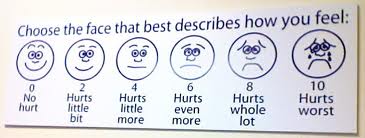
The medical profession has finally come up with a way for patients to convey the degree of pain they feel. Not completely accurate, mind you, but a far cry from former verbal descriptions. Everybody’s pain threshold is different. It’s a start.

Reading people is very important; not only in hospital rooms, but in everyday life as well. It is only as we put our agenda on pause and tune into the person, or the audience, that we will truly engage with them. Part of an adage from American writer William Arthur Ward (1921-1994) reads Before you speak, listen. Knowing something about the person, or group, with whom you are engaged assures some measure of improvement in the communication taking place. Reading between the lines, what is said, what is not, body language, eye contact, physical posturing, etc., all play a part in sensing the mindset of the other person. And unless they are totally self-absorbed, they should be trying to read your persuasions as well.

Too many of us think that most people understand exactly what we mean when we speak. Do not be so naïve. Irish Playwright and Essayist GEORGE BERNARD SHAW (1856-1950) said The single biggest problem in communication is the illusion that it has taken place. Thus the importance of reading the other person. [This becomes more difficult with a larger audience, but it can be done.]

When it comes down to it, it is all about relationships. How well do you know your audience? The person with whom you are talking? How well do they know you? How transparent are you before others? Are you trustworthy? Do people hold confidence in what you say because of who you are? To be believed, you must BE believable. To inspire another, you must speak with authority and confidence. Of course, these things can be faked… for a time. But little cover-up is needed for the truth. (That’s why I trust God: I do not believe He is lying to me.)

There is a certain safety that surfaces when you are in the presence of a person who is trustworthy. We all want it and need it. You need to be both for all the people in your life—safe and trustworthy. So hone your people-reading skills. Listen before you speak. But be such a person that, when you are being scrutinized, you are uncovered as really clean.


Have a nice week,

Gary

walls

Walls

Walls. Why walls?  Support, protection, set boundaries, privacy, safety, beautify, restrain, imprison. We need walls. We all have walls in our lives; some keep us safe; some provide definition; others, keep us from accomplishing our goals. Some walls are physical, solid, immovable (unless you have an M1 Abrams or a Paramount Marauder). Some are corporate, giving rise to good-‘ol-boy clubs and enigmatic alliances. Most walls are personal— built to keep others out; built to protect, to hide, to maintain one’s personal identity and privacy.

At multiple times during our life-span we will confront many walls that are seemingly insurmountable. Many of us will be stopped dead; for whatever reason we will not conquer that wall. We will learn to dwell, contentedly, next to it. At first we might try to climb over it or knock it down; but after a while we will grow comfortable and simply let things stay the same. Worse still, others will never approach their walls at all. They will rise to their level of competence in a field, a relationship, a skill, and never consider that there might be something better, more fulfilling, on the other side of that wall.

There are leadership consultants, counselors, and even friends who tell us to not consider these walls as obstacles, but rather as challenges. Describe it how you will, the wall remains. How will you approach it? Will you approach it at all? If it is a wall of protection it might not be wise to knock it down. If otherwise, be it professional, relational, emotional or mental, you will need to overcome it, push past it, to fulfill God’s design on your life. If you do not you will never be fulfill your quest for purpose; you’ll merely take what comes your way.

We need walls— to guard us, provide us shelter, and to set our ethical, moral boundaries. But certain walls may be more detrimental than necessary. If your walls are private, inner, secret, they may not provide you as much protection as you imagine: they may actually be holding you captive to your own insecurities and unstated fears. God never intends for any of us to live in fear and insecurity. If you need help breaking-out, overcoming, whatever…, find professional, and/or spiritual help. Too many of our walls are in fact more than merely psychological/emotional ones; they have a spiritual dynamic to them as well.

So, start climbing, scaling, drilling, pounding, tunneling, and shelling those walls that hold you back— one hammer-chisel at a time. Trust a friend, and trust in the God who made you, to supply you with the strength you will need for the task. You don’t have to be in this alone.


Have a nice week,

Gary

renew your strength

Dr, Gary, Davis, Needinc, Clueless, Christianity, Christian,           Tired. Run down. Beat. Weary. Weak. Exhausted. These are some words that have become common descriptors in our personal vocabulary. There are some people with seemingly inexhaustible energy— toddlers, teenagers especially (after they get out of bed at 11:00 a.m.), twentysomethings, and Type-A’s. I’m not one of them; are you? There appears to be a collective malady that most of us sleep too little, eat too much, and work too hard (doing the wrong stuff). Something must change!

There is some poetry in the Judeo/Christian scriptures that offers us some good advice.

Blessed is the man who does not walk in the counsel of the wicked,

or stand in the way of sinners, or sit in the seat of mockers.

But his delight is in the law of the Lord, and on his law he meditates day and night.

He is like a tree planted by streams of water,

which yields its fruit in season and whose leaf does not wither.

Whatever he does prospers.

Not so the wicked! They are like chaff that the wind blows away.

Therefore the wicked will not stand in the judgment,

nor sinners in the assembly of the righteous.

For the Lord watches over the way of the righteous,

but the way of the wicked will perish.

-Psalm 1

            This first poem (originally expressed in song) compares those who delight in God, Blessed is the man, and those who do not, Not so the wicked. The first does not walk, stand, or sit under the counsel of the wicked, sinners, or mockers. Of course, we dwell in the midst of such people every day of our lives; but the decision to heed their “insights” is ours. The poet directs us to delight in the law of God. Though to postmodern ears this smacks of conservative boredom, its consequences are timeless— He is like a tree planted by streams of water. Image it, lie back in the grass under the tree and let the rushing water cool your weary soul and body.

The second type, the wicked, are merely picked up by the wind and blown away. A lot like I feel when I lose my focus and faith—blowin’ in the wind (Peter, Paul & Mary), but without any answers.

Blend the ideas of the above song with the final lines of another—

Those who wait on the Lord will renew their strength.

They will soar on wings like eagles;

they will run and not grow weary, they will walk and not be faint.

-Psalm 40:31

            Waiting on the Lord is not meditating on emptiness; nor is it simply stillness. Rather, it is the concentration of our emotions, minds, and busyness on the One who can replenish our strength so we can soar on wings like eagles. You get the picture. Take in the view. Don’t let this ancient counsel fall on deaf ears.

Have a nice week,

Gary

whining

Charles Spurgeon (1834-1892) once observed, “Many people are born crying, live complaining, and die disappointed.” It seems a malady of many that extends into history. People live their entire lives complaining about how everyone and everything is against them. They always have a reason, an excuse, why “it’s not my fault.” “Someone else didn’t do their part to make it possible me to do my part.”I didn’t have time.” “I had a headache.” “The paperwork didn’t arrive on time.”

Pick a reason; there will always be one.


It’s called whining. Many of us make it a way of life- we cannot take hold of our lives, so we side-step the real issues, ourselves, and scapegoat the cause off on circumstances or someone else. Some of us seem to lack the fortitude and determination to fight our own foibles, our own ineptitudes, our shortcomings, and to overcome our failures. To be sure, it will always be easier to grumble about something than to dosomething to change it. It’s even easier to blame the whole thing on someone else.
It seems most of Western society is looking for any other cause for our own problems than ourselves. It obviously can’t be me that’s the problem? I’m not responsible for what I’ve done! It’s my parents, my lack of education, my skin colour, my sexual preference, my insecurities. I am NOT to blame!
A week after Jonathan Edwards (1703-1758) was fired (June 22, 1750) as pastor of his church in Northampton, MA, he penned this letter to a friend-

I have nothing visible to depend upon for my future usefulness, or the subsistence of my numerous family. But I hope we have an all-sufficient, faithful, covenant God, to depend upon. I desire that I may ever submit to him, walk humbly before him, and put my trust wholly in him. I desire, dear, Sir, your prayers for us, under our present circumstances.”

Oddly, he stayed on in Northampton to preach in his church until they found a suitable replacement.  Edwards went on to become president of the College of New Jersey, later Princeton University.
If you find yourself a whiner, maybe it’s time you focused your eyes on the God who made you and learned that He has your best interest at heart. Trust Him. Maybe it’s also time for you to end the chronic attitude of complaining and do something to change your life situation. If, on the other hand, you find yourself living with a whiner, maybe it’s time you told them to take responsibility for their own failings, and admit their guilt. This may require you to help them overcome their own stumbling blocks; your reward will be the silence of their petulant grumblings.


Have a nice week,

Gary