exuberance

Sini Merikallio

William Blake (1757-1827), painter, printmaker & exceptional poet during Britain’s Romantic Era, once proclaimed that—

“Exuberance is beauty!”

And how right he was! In a baby’s eyes, a child’s excitement, a boy’s exhilaration at catching his first fish, in an ingénue’s coquettish joy at her first date, or in a bride’s elation on her wedding day, their outward demeanor accurately reveals their inner, entire body, mind, & soul captivation.

Exuberance leaves nothing to the imagination. Watch any football game; it is easy to tell which side just scored just by the roar of the crowd. Exuberance is an obvious expression of our overjoyed sense of excitement within. Unfortunately, exuberance subsides to a more socially acceptable expression as we age. Even though exuberance is expressed quite differently by different kinds of people, it is, in fact, a sad reality that our exuberance follows our body’s descent into decay and becomes boringly sedated. It becomes a civilized passion, which is hardly a passion at all.

How sad.

Not that we should become like little children, with joyous expressions of abandon, nor like exuberant fans at a ball game going wild. But, rather…, something more; something that lifts us, and those around us, to a brighter, lighter plane of perspective; to a new life, as it were, for a moment, or even a lifetime. Too many of us have died, emotionally, passionately, way before our time. We’ve lost that zest for life that is quintessential for anyone claiming to be human…, and still breathing. Could it be that though we are not dead yet…, it is hard for others to notice any life in us. To some degree our increasing concern with caution and personal preservation has supplanted our passion for living, our joie de vivre. Could it be that we have actually lost our life’s core, our undergirding principles? It is difficult to feign life when there is little, if any, clarity about who we are within.

Therefore, for any exuberance to gain expression, we must first regain a sense of who we truly are, of our core values and of a sense of what we are all about. Only then can we let out a good R-O-A-R every now & then.

So let us get to work; so that we once more may express our joy with great exuberance of heart— shouting wildly, singing loudly, flapping our appendages in the air so all the world. Let us dance, twirling in circles with glee; let us do back flips, collapsing on the ground in a puddle of laughter. Let us let our enthusiasm for life be known for all to see. Exuberance is beauty!

You are not dead yet; neither am I. So let’s get at it! Reestablishing our core within so we can claim life to the fullest inside and out! Exuberance is so much more catching. It brings life to all who come near it.

Have a nice week,

Gary

Aftermath


Tragedy
 strikes all of us at one time or another. Whether it be death of a loved one or the devastation of home & livelihood its effects upon us are shattering. The experience, the loss, is overwhelming; it crushes our spirit and sucks out our very life’s-breath. Most of us have experienced such tragedies in our lives, leaving us empty and numb. Words of comfort and solace barely get through my blank detachment.

Then comes the aftermath— sorting through the remnants of a life, trying to rebuild, trying to make sense of the physical and personal destruction that has just consumed every fiber of your being. There are the BIG things— replacing a home, a business, a livelihood; taking care of children, parents, employees, those who are crushed and exhausted. For some, it means even rebuilding a country after a catastrophic national disaster or defeat. Yes, these things must be addressed, even though your energies are already spent.

In some way, though, it is the small things that are more difficult to deal with— the loss of photos, of a history that was filled with joy and frivolity; a loss of trinkets, personal gifts, torn shreds of clothing that once draped a loved one in grace & beauty. Memories all, now gone.

It is in the aftermath of destruction & loss that our metal is proven. It is the manner in which we face the aftermath that we reveal our courage or collapse into a mire of grief & despondency. There is not always hope after some of the volleys life sends our way. But there is always strength to be found in arms of the God who created us, sustains us, and now carries us…, if we will but let Him do so.

Never discount the succor and rejuvenation that flow from the Life-Source of all Being. The God of the Universe— Jesus Christ.

Have a nice week,

Gary

…of bed-boards and springboards

Matanya

At this moment I am sitting by my mother’s side as she lies on a bed dying. She always preferred her bed to be on the firmer side. Not too much so, but sufficiently so. Bed-boards always make a soft bed so much more comfortable. She lies on such a bed at this moment. Not that it matters to her that much. She is in pain, breathing with some degree of difficulty.

She is leaving us.

Yet as she lies in this bed, she is also taking her first steps onto a springboard. This will be her launching step into a world filled with glory, golden light, and the exuberance of a new life, peace, and rest for a weary traveler. Each of us, unquestionably, will come to this point. The only questions are when, where, and how?  Will it be gentle, rough? Drawn out, or quick? Surrounded by friends & family; or alone?

Though we may wish it, this is not the case for everyone. The springboard does not always launch to a place of celebration—rather, it shatters, plunging its load into an abyss of captivity. It is a dark place where people can avoid each other; a place where they will finally get what they truly want—a world of total independence, with no responsibility to care for others. It is a world devoid of God, His love, and His perimeters of protection set in motion on this planet to guard its inhabitants from self-destruction. In this underworld those safe-guards do not exist.

It is now late into the night. I sit here alone with my mother…, waiting for her to take that initial leap from a springboard, propelling her into that new, exhilarating, vibrant life. For that has been her life’s desire, “to dwell in the house of the Lord forever.

For some of my friends, my dear close friends, this is not their desire. Their desire is to have all that this world has to give them. And that is what they will receive.

I weep for them.

Sitting here, I am envious that my mother, so much the gracious servant during her time in this realm, will soon get to play and dance and sing in the courtroom of heaven. There’s just the matter of this human shell to discard.

It is true; we all will come to that point of crossing-over. For my mother, it will be from a bed-board to a springboard, to life. When our time comes to step up onto the springboard, what will be our next step? Where will we come down? And what must we do beforehand to prepare?

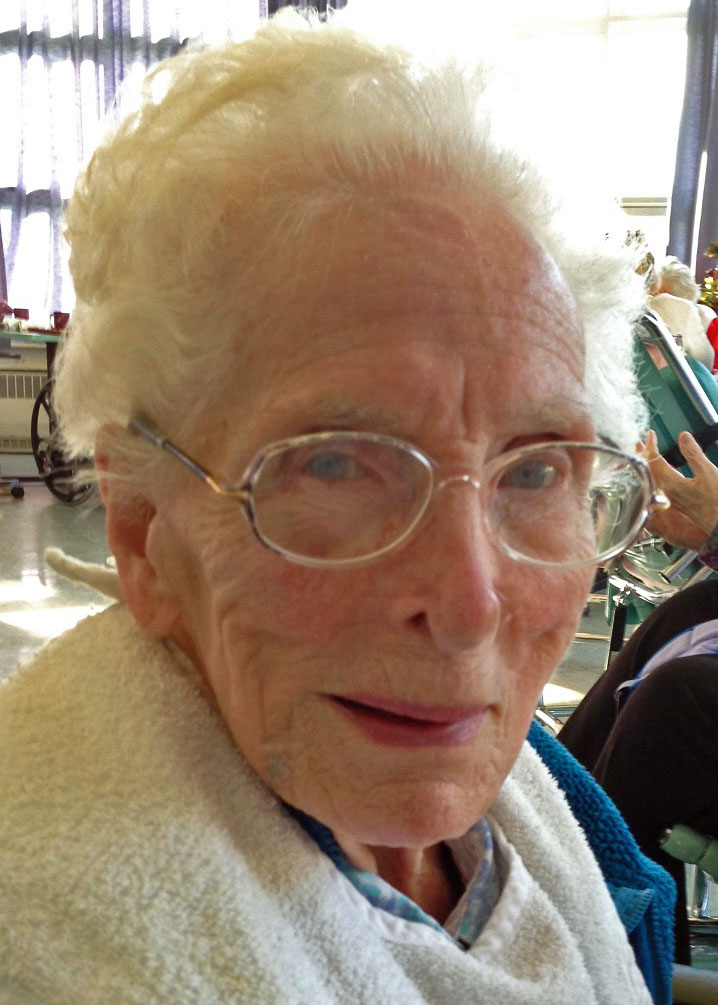
[On Saturday, January 19th, 2013, at 1:57 p.m., Florence Adelaine Andersen Davis, jumped into the arms of our heavenly Father; there to celebrate His glory forever. She was 97 years old, by our reckoning. I am soooooo jealous.]

Mom- 27 Dec 2012

Following in the family footsteps,

Gary

But….

“BUT wait! There’s more!”  “I agree with everything you say Senator, BUT… .”  “There is significant truth in what you say, BUT… .”  “No, really, you look stunning in that color, BUT… .”  “I’ve always been one of your greatest supporters, BUT… .”  “This is obviously the best option to meet our goals, BUT… .” 

BUT! BUT! BUT! BUT! BUT! Doesn’t that word just make you want to kick some people in the, a, er, BUTT!?!

BUT can signify an agreeable disagreeability. It signals “You’ve missed something.” It implies a lack of consideration of extraneous observations, facts, circumstances. Or, it can be a curt interruption that subtly, or not so subtly, counters your ideas with mine— “Yes, BUT… .”  Which is a polite manner of saying, “You are so wrong I can’t believe it!” or “How can you be so stupid!?!” “Now listen to what I have to say!”

The problem is that we can be so far into formulating our BUT, our counterpoint, our objections, that we often fail to fully listen to the other person’s presentation.

            Why is that?

Set forth somewhat callously, we have to WIN. No matter how reasonable or thoroughly developed the other person’s point of view, WE have to be the one who is not only right, BUT more right. So we rudely interrupt, speak LOUDER, use ad hominem (go on the attack), or slander through innuendo. Granted, genuine disagreements DO exist between people, businesses, and governments. BUT in an attempt to be more right, we rarely listen to the rationale and heart-felt beliefs undergirding someone else’s perspective. WINNING has supplanted listening as the modus operandi. Far be it from most of us to take the lower seat and listen to the opposition’s case. And the thought of being gracious in the heat of argument obviously reveals weakness. Much easier to be rude and interrupt.

Seriously, in what ways does WINNING against the opposition trump careful listening and reconciliation? It is true that some things are worth fighting for. BUT at the expense of human decency and graciousness!?! I pray not.  [Most of us do not have that nice a butt to begin with, anyway.]

So help us God.

Gary

unexpected expectations

“A thing long expected takes the form of the unexpected when at last it comes.”    – Mark Twain

What is it that you look forward to? What is it that causes you anticipation, glee, tummy tumbling joy? What is it that brings elation and hope to your daily life? Not merely that relaxing drink with close friends at the end of the day; or the exotic cheese platter awaiting your indulgence when you arrive home; not even that imminent winter break in Mexico or the Mediterranean. What are the really BIG things that draw you into the future with anticipation, as if a vision of grandeur were summoning you to greatness?

When we are young we aspire to all kinds of greatness. “I want to be a doctor.” “I want to be a Senator.” “I want to be a futbol star.” In my youth I schemed of being a CIA agent. Er, never mind; let’s not go there.

Charlie Brown (Peanuts comic strip) once said, “I’ve taken 100 shots and hit my target every time!” Lucy asks, “What was your target?”  “Earth.” There is a common axiom that reads— If you aim at nothing you are bound to hit it. How many of us go through our lives aiming at nothing? Hitting marks that do not matter. Winning at checkers or tic-tac-toe.

Could it be that our expectations of what’s to come are too meager, insufficient to meet life’s challenge, pathetic yearnings that barely offer us glimpses of what could be if we only put out just a smidgen more effort? We aim at earth…, and that is all we get. There must be more.

The key secret of life is to set our aspirations HIGH, even though we may never achieve them, the stretch will take us further than we might have imagined.

But there is another secret to realizing our expectations— learning to adapt. The reality of what we expect to come may arrive quite differently than we had expected. God’s little surprises that reshape us and recreate what we thought was great, morphing into something so much more. Never doubt that the God of the Universe will grant you greatness; but it may not be the greatness you expected.

Great expectations ahead!

Gary

check points

March 31st was determined as the last day of the year under the Julian Calendar of the Roman Empire. But this set in motion a time-drift of approximately 11 minutes a year between vernal equinoxes. By the time church astronomers recalculated the loss in time 10 days had been lost since Roman times. When this was reported to Pope Gregory XIII, he signed a Papal Bull (Inter gravissimas) correcting the time-loss, establishing a new calendar in 1582 (named the Gregorian Calendar, appropriately) that also designated December 31st as the last day of the year. [Albeit, many Protestants, including the Pilgrims, continued to use the Julian Calendar in opposition to the Church’s injunction, insisting on March 31st as the last day of the year.]

In this postChristian era, New Year’s Eve has been elevated (or denigrated) to a time of Baucus revelry and celebration, including the consumption of liberal amounts of alcohol. For many, New Year’s Eve is a time of laying aside the mistakes of the past and making resolutions of doing better in the coming year. As we all know this doesn’t work out so much; though for 1-2 weeks it seems right.

Nonetheless, it is good and right to establish check points throughout life to measure the progress made toward our aspirations. New Year’s Eve is probably a more significant point as it also marks the shift in the civil calendar. So as you begin your celebrations for the New Year, you may find it enjoyable and enlightening to reminisce on your life-progress of this past year.

On a 1-10 scale, what progress did you make toward your aspirations in —

– Your awareness of who you are

– Your sense of integrity

– Resolving interpersonal crises

– Your work-ethic

– Being safe before God

– In making a difference in life

– In learning to lead by example

– Being gracious

– Trusting others

– Letting go

Please complete these check points BEFORE further consumption of alcohol.

Happy New Year!

Gary

bah! humbug!

Why is it that some people just seem to get out of bed grumpy? Admittedly, I am not the most social a person until I have a cup of coffee in me; or two, or three. OK, I can tolerate conversation on one. But there are some people who wake up to make their day, and yours, miserable.

For some it is seasonal. Seasonal Affective Disorder— the darkness becomes overwhelming; the depression spirals downward. For others it is far more serious; for a cluster of historical and/or environmental reasons their life itself is miserable. For some personal reason they believe it their responsibility to pass their wretched state along to all they meet. O joy!

Though it can be true that this perpetually dark mood can be due to hereditary, it is not true that that it is irrevocable. There have been those who have come to me for counsel who have revealed their consistent struggle with a sense of failure and depression; some, even to a point of desperation, longing for relief. In an earlier phase of life my wife would often describe my personality as morbidly introspective. And she was right. My depression and external moods were deeply rooted in failure.

What did I do to claw my way out of this perpetual Bah Humbug!?

  1. First, I gave up trying to please or impress others. I simply started living within the parameters of my gifts, skills, and passions. I developed and expressed my strengths and addressed my weaknesses in privacy.
  2. Then, secondly, I stopped using others to feed me and started to feed them. I became the vessel of service in their lives rather than always calling on them to empty themselves for my sake.
  3. In a couple months I found I could laugh more. I kept laughing. There is always a tad of joy and comedy is almost every situation.
  4. My conversations with God became less intense, and more receptive. I accepted His forgiveness in Jesus Christ and laid aside the roiling guilt that added to my failure and depression.
  5. To my shock I discovered that there were some people who actually enjoyed being my friends. This surprised me. I shifted to enjoyment in our friendship rather than making them about me.

I know there were probably a number of conscious and unconscious things that went on in that period of my life. But it sure feels great to no longer carry around my own inner Scrooge.

Have a nice week,

Gary

Christmas

011_edited-1For most people in Western cultures Christmas is about giving gifts. Whatever your economic level, you want to give gifts—whether home-made or purchased, even at great expense. For many, this is all Christmas is about, with a sprinkling of parties, decorations (some to exceptional heights), & very special treats, like Christmas cookies. Not that this is all that bad. It certainly is not! For all the giving (read buying), decorating, and celebrating fills the air with a sense of good will, of caring for our fellow human being, and of fostering peace on earth, good will toward men.

Now that we live in a postChristian culture, and have since the early 1980s, it strikes me as somewhat miraculous that we celebrate the entrance of the God of the universe onto our insignificant meager planet. Of course, His story, that of the First Christmas & beyond, has been relegated to the traditionalists, conservatives, and religious types of Christendom decayed.

So what is the place of the genuine Christian during this secular holiday season? Is it to withdraw into our ancient celebrations of joy around the birth of the world’s Saviour? Is it to ignore the world’s celebration altogether? Or, maybe, to enter into it with moderation? Maybe it should be celebrated only in the confines of our own families, and church?

For our part, my wife and I intend to celebrate Christmas, the historical birth of the Christ-child, who would one day save our world, as well as the cultural Christmas celebrated by those around us, until the cows come home. Actually, we don’t own any cows; but you get the point! If we can inspire anyone in this economically doomed, war-torn, pain wracked, broken world to celebrate Christ in the midst of their pain, sorrow, and fear, then we will have opened a window for the Spirit of God to enter in to bring healing, peace, love, and His deep regeneration for a new life within.

The Wassail is boiling on the wood stove. Come on over! You are welcome here…, as it is in heaven.

May God grant you the restoration to life you long for this Christmas,

Gary

longing

          Throughout our lives we pursue things that we hope will give us fulfillment, happiness. Too many believe that happiness comes through acquiring money when, actually, it merely eliminates a fear of poverty. Some find “the ultimate rush” in sex, alcohol, drugs. Others look for their significant other, in hopes that they will find their own soul in relationships. Expectations in relationships can be disappointing. Some find meaning in status, success in business, music, design, or theatre.

Yet, underlying all of these pursuits is something deeper— longing. British author C. S Lewis once wrote, “If I find in myself a desire which no experience in this world can satisfy, the most probable explanation is that I was made for another world.” Quite a point to ponder.

Disappointment can be a major catalyst, igniting our deepest inner longing. Not the trivial regrets we feel when we realize the frivolity of some things. Rather those depth-of-soul longings for something more, something deeper, solid, and incorruptible. We want a security found in the bedrock of all being as the sanctuary for our lives.

In recent times, the value of soul, of a single life, has been so diminished that those of us who remain barely react to the loss. The Evening News has dulled our senses. Yet we are vessels without a rudder when a death comes near. It shakes us. We have no emotional or spiritual mechanisms to cope with this new, final reality. Thus do we float on a vacuous sea of fog, with no rudder or compass to set us back on course. For me, this has always seemed a forlorn loss of deeper resolution.

I, too, have this deep longing. Yet I know that, someday, it will be utterly fulfilled in a restoration of my soul with the God who made me, and made us all. Is this a naive fantasy to which I cling? I think not! There are too many compiled coincidences in my life for this longing to go unsatisfied. Although, it may be in another world, most likely, I do have such great expectations to anticipate in my future. How about you?

Have a nice week,

Gary

the fact of the matter…

Reference— A fact (derived from the Latin factum) is something that has really occurred or is actually the case. The usual test for a statement of fact is verifiability, that is, whether it can be proven to correspond to experience. Standard reference works are often used to check facts. Scientific facts are verified by repeatable experiments… . Fact is sometimes used synonymously with truth, as distinct from opinions, falsehoods, or matters of taste.  [http://en.wikipedia.org/wiki/Fact#Fact_in_history]

Facts are slippery little things. For example, what is a historical fact, an emotional fact, a legal fact? Whole fields of philosophy are devoted to the study of facts- Ontology (what is actually there), and Epistemology (how we know things). For instance, because something can be stated as True, does is make it True? God is a giraffe with butterfly wings, or, there is no God, or, the earth once had two moons, or, Beatrice loves me. Does she, really? How do you know any of these statements are True?

The fact of the matter is that too many of us create facts to fit our beliefs, our way of life, our preferences—  in morality, interpersonal relationships, and in business practice. Too many of us simply believe that facts are predicated on our individual, personal preferences. Can you hear that? Think a minute. This is probably the most implausible fact of all! What happened to real reality?!?

Then there are the issues surrounding religious facts— miracles, the historical writings of religions and their founding, the verifiability and reliability of people like Abraham, Jesus, the Buddha, Confucius, Mohammed, Lao Tsu, Gandhi. What’s a body to do? How do you determine which religion is “true?”

Which brings us to one final question—  What if…? What if the fact of the matter actually does lie in an otherworldly, spiritual realm that contains Ultimate Truths? How do we blend the supernatural with what we believe about this natural realm? Maybe there is more to “religious facts,” than we want to acknowledge. This clearly calls for further, deeper investigation and discussion. Contact me.

There now…, haven’t I mussed up your mind for the day?!?

Have a nice week,

Gary